
Blue Sage
Salvia clevelandii 'Winifred Gilman'
Blue Sage
Salvia clevelandii 'Winifred Gilman'
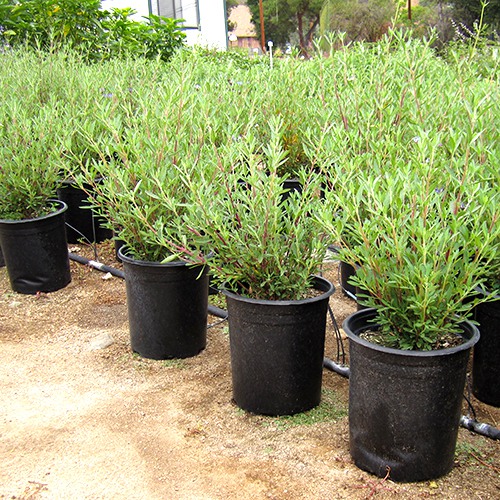
Salvia clevelandii ‘Winifred Gilman’ is one of the most well known California native sages, valued for its strong fragrance, soft gray foliage, and vibrant blooms. It’s part of the chaparral plant community, which means it’s naturally adapted to dry summers and thrives in low water landscapes.
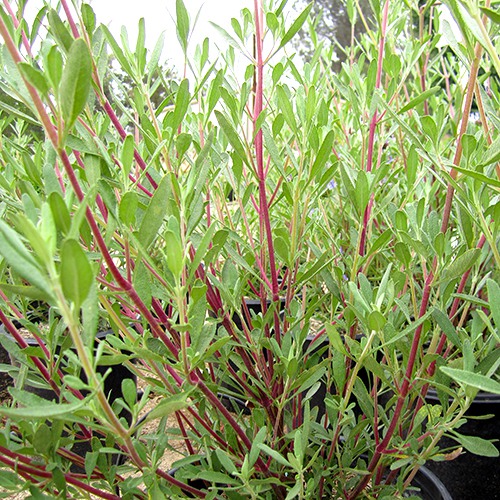
The foliage is a muted gray green with a slightly fuzzy texture, and it carries a distinct, aromatic scent that becomes more noticeable when brushed or warmed by the sun. Even when it’s not in bloom, it has a strong presence in the garden.
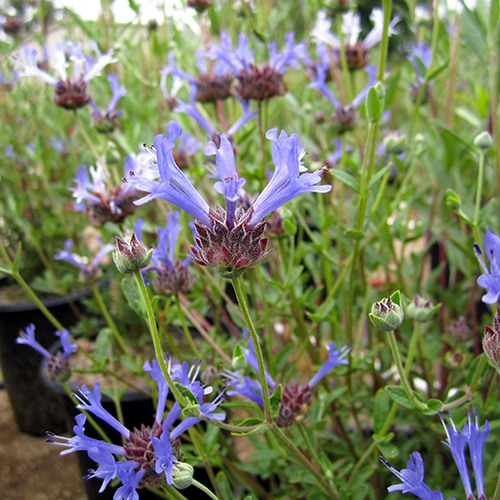
In late spring through early summer, it produces tall stems topped with whorls of lavender to violet blue flowers. These blooms rise above the foliage and create a layered, airy look while adding a good amount of color.
It tends to grow into a rounded, somewhat open shrub that can feel both structured and relaxed at the same time. It works well as a focal plant or as part of a native planting where texture and seasonal bloom are key.
Salvia ‘Winifred Gilman’ grows best in full sun and requires excellent drainage. Once established, it is highly drought tolerant and prefers little to no summer water. Overwatering can shorten its lifespan, which is common with many California natives.
It typically reaches about 4 to 6 feet tall and wide, forming a full, rounded shrub. It is well suited for USDA zones 8 through 10 and performs well in mild climates. The foliage is evergreen.
This plant has low toxicity and is generally a safe choice for gardens with pets and children.
The flowers attract pollinators such as bees and are especially attractive to hummingbirds.
It is generally deer resistant and well suited for low maintenance plantings.
Salvia clevelandii ‘Winifred Gilman’ fits especially well into native, chaparral, Mediterranean, and pollinator-friendly garden designs, where its fragrance, color, and drought tolerance can be fully appreciated.
Expert Tip:
I like using this as a primary anchor in a dry garden and building around it. It has enough presence on its own, so pairing it with simpler, lower plants helps keep the composition balanced, such as Ceanothus Yankee Point. Giving it plenty of space to mature!
— Nick from Rooted Theory
Proper planting technique will help your plants thrive! Follow these simple steps to help your plants establish quickly, develop a strong root system, and live longer:
- Properly dig the hole
- Amend the soil to suit each particular plant
- Place the plant and backfill the soil
- Provide ample water for each particular plant
- Review our how to plant guide!
For detailed information, please download our planting guides: