
Canyon Prince Wild Rye
leymus condensatus 'Canyon Prince'
Canyon Prince Wild Rye
leymus condensatus 'Canyon Prince'
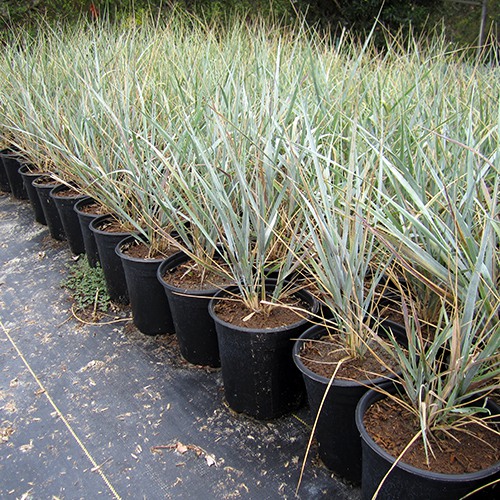
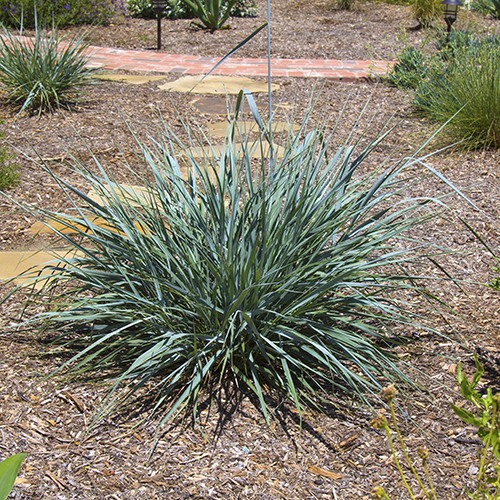
Leymus condensatus ‘Canyon Prince’, commonly known as Giant Wild Rye, is a bold, clumping grass that brings strong structure and cool color into the landscape. It’s part of the California native chaparral plant community, making it well adapted to dry conditions while still providing a dramatic visual presence.
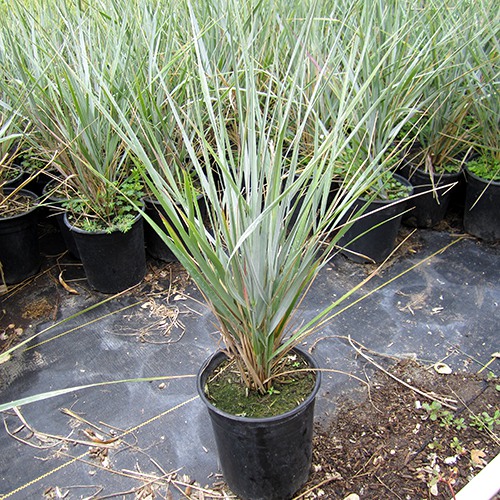
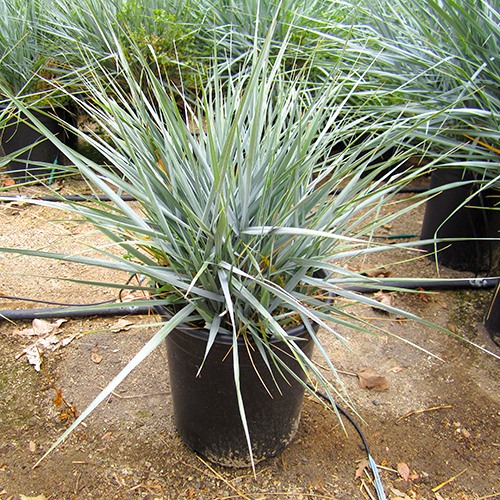
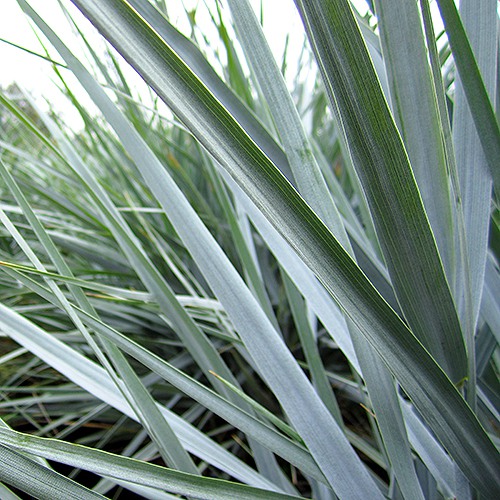
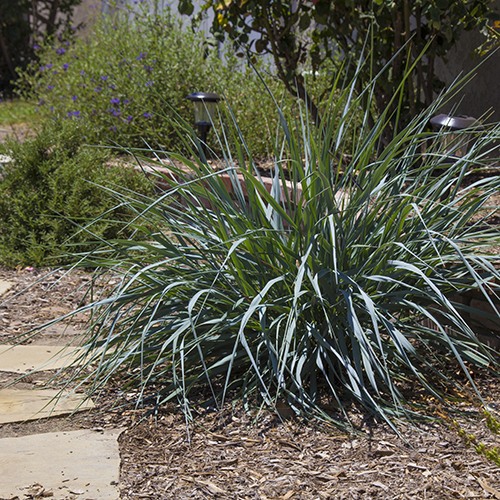
The foliage is made up of broad, upright blades in a striking blue gray tone. The color holds well throughout the year and creates a strong contrast against greener or warmer toned plants.
It forms a dense, upright clump that adds height and architectural structure, making it effective as a focal point or when used in repetition for rhythm. Compared to softer grasses, it has a more rigid, sculptural quality.
In late spring to early summer, tall flower stalks rise above the foliage, adding additional height and a more natural, seasonal layer.
It works well on slopes, in large scale plantings, or as a backdrop where strong vertical elements are needed.
Leymus ‘Canyon Prince’ grows best in full sun and requires well drained soil. Once established, it is highly drought tolerant and thrives in low water conditions.
It typically reaches about 4 to 6 feet tall and wide, with flower stalks extending higher. It is well suited for USDA zones 7 through 10. The foliage is evergreen.
This plant has low toxicity and is generally safe for gardens with pets and children.
The flowers may attract pollinators such as bees.
It is generally deer resistant.
One important consideration is its spreading habit. While it is often described as clumping, it can slowly expand outward by rhizomes over time, especially with additional water, so placement and spacing should be considered.
Leymus condensatus ‘Canyon Prince’ fits especially well into native, Mediterranean, and modern landscape designs, where its color and structure can be used to anchor a planting.
It pairs well with plants like Arctostaphylos ‘Emerald Carpet’ to create a dense native ground layer, Salvia ‘Bee’s Bliss’ to introduce low, spreading color, and Dudleya to add a sculptural succulent contrast against the blue foliage.
Expert Tip:
Place this where it has room to expand and avoid overwatering, because additional moisture can encourage it to spread more aggressively. Giving it space will help maintain a cleaner, more controlled look over time. It's great for bioswales and runoff areas.
— Nick from Rooted Theory
Proper planting technique will help your plants thrive! Follow these simple steps to help your plants establish quickly, develop a strong root system, and live longer:
- Properly dig the hole
- Amend the soil to suit each particular plant
- Place the plant and backfill the soil
- Provide ample water for each particular plant
- Review our how to plant guide!
For detailed information, please download our planting guides: