
Elk Blue California Gray Rush
Juncus patens 'Elk Blue'
Elk Blue California Gray Rush
Juncus patens 'Elk Blue'
Juncus patens ‘Elk Blue’, commonly known as California Gray Rush, is a native, clumping grass-like plant that brings soft color and upright structure into the landscape. It’s part of the chaparral plant community, making it well adapted to dry conditions while still handling occasional moisture.
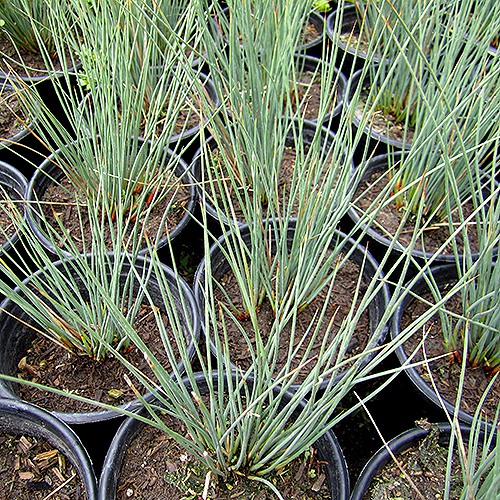
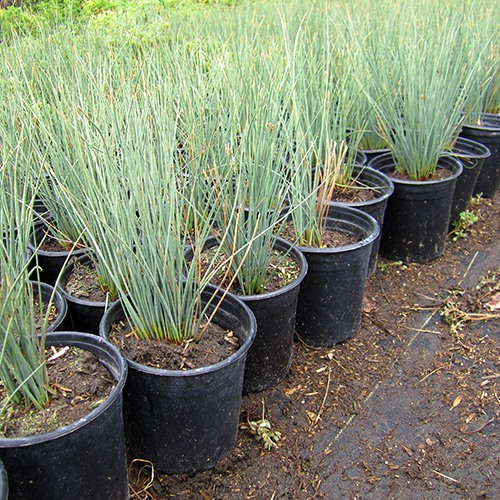
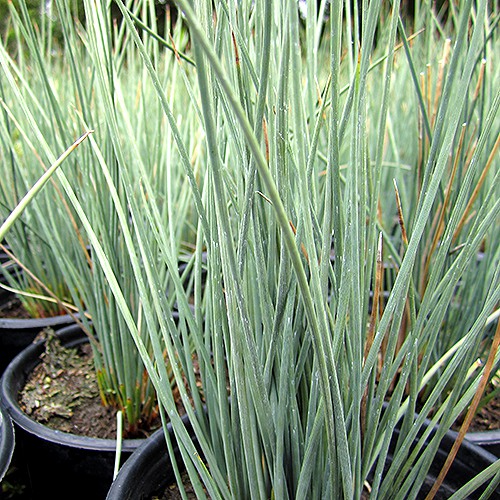
The foliage consists of upright, cylindrical stems in a blue gray tone that give the plant a clean, modern look. The color is subtle but effective, especially when used in repetition or against darker greens.
It forms a dense, fountain-like clump that adds vertical movement without feeling too rigid. The texture is simple and refined, making it easy to integrate into a wide range of planting styles.
In late spring through summer, it produces small, understated flower clusters near the tips of the stems, though the plant is primarily grown for its foliage.
It works well along pathways, in mass plantings, or as a transition plant between more structured and natural areas. It’s also a great option for areas that may receive occasional runoff or moisture.
Juncus ‘Elk Blue’ grows best in full sun to partial shade and prefers well drained soil, though it can tolerate periods of moisture. Once established, it is drought tolerant.
It typically reaches about 1 to 2 feet tall and wide, forming a compact, upright clump. It is well suited for USDA zones 7 through 10. The foliage is evergreen.
This plant has low toxicity and is generally safe for gardens with pets and children.
The flowers may attract minor pollinator activity.
It is generally deer resistant.
Juncus patens ‘Elk Blue’ fits especially well into native, modern, and Mediterranean garden designs, where its color and form can be used to create subtle contrast and rhythm.
It pairs well with plants like Arctostaphylos ‘Howard McMinn’ to create a layered native planting, Eriogonum fasciculatum to add seasonal blooms and texture, and Salvia ‘Bee’s Bliss’ to introduce low, spreading color that complements the cool tones.
Expert Tip:
Place this in areas where it can be used in repetition, because its simple form becomes more impactful when grouped. It also performs well in spots that receive occasional moisture, making it a good transition plant between dry and irrigated areas.
— Nick from Rooted Theory
Proper planting technique will help your plants thrive! Follow these simple steps to help your plants establish quickly, develop a strong root system, and live longer:
- Properly dig the hole
- Amend the soil to suit each particular plant
- Place the plant and backfill the soil
- Provide ample water for each particular plant
- Review our how to plant guide!
For detailed information, please download our planting guides: