
Forest Pansy Redbud - Multi Trunk
Cercis occidentalis 'Forest Pansy'
Forest Pansy Redbud - Multi Trunk
Cercis occidentalis 'Forest Pansy'
Cercis occidentalis ‘Forest Pansy’, commonly known as Western Redbud, is a standout small tree that brings rich foliage color and strong seasonal interest into the landscape. In multi trunk form, it leans more into its natural character, with a wider, more sculptural presence.
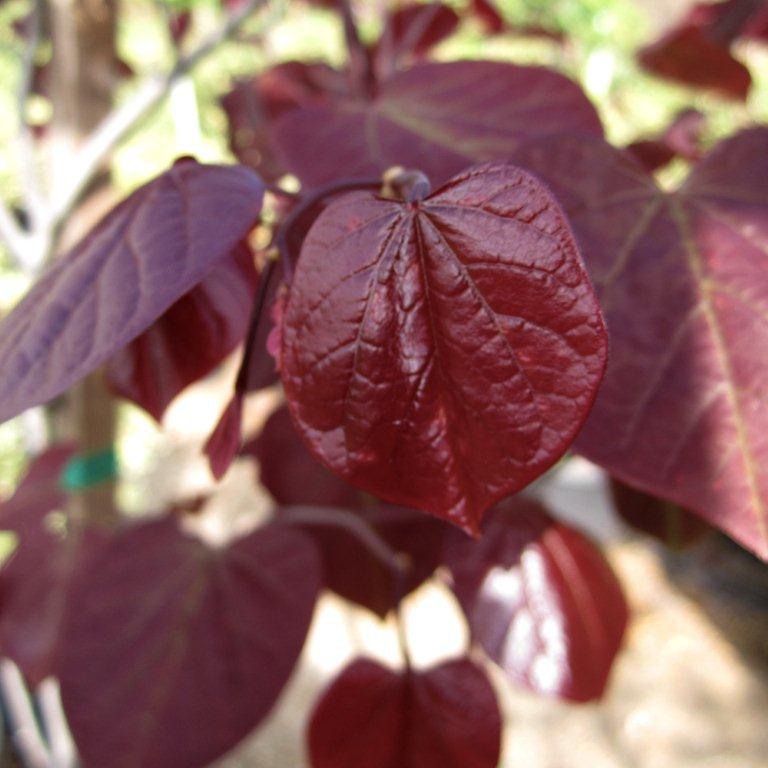
The leaves are a deep reddish purple when they emerge, softening slightly as the season progresses depending on light and heat. Their rounded, heart shaped form gives the tree a softer look that contrasts nicely with more rigid plants.
In early spring, before the foliage fully fills in, clusters of pink to magenta flowers appear directly along the branches. That blooming habit gives the tree a really unique look and adds a strong seasonal moment.
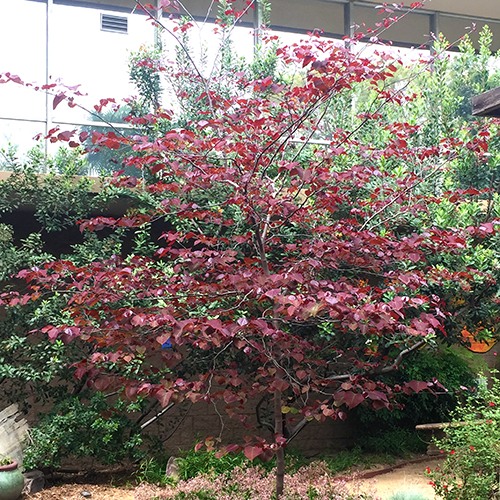
The multi trunk form creates a broader, more layered structure compared to a single trunk tree. While it may not be quite as tall right out of the nursery, it tends to be wider and has a more visually interesting branching framework from the start. The trunks themselves become a feature, especially as the tree matures.
Cercis occidentalis is part of the chaparral plant community and is well adapted to California’s dry conditions. It grows best in full sun to partial shade and prefers well drained soil. Once established, it is drought tolerant and performs well with minimal summer water.
In this form, it typically reaches about 12 to 18 feet tall and can spread 15 to 20 feet wide, forming a broad, layered canopy. It is well suited for USDA zones 7 through 10 and is fairly adaptable in mild climates. The foliage is deciduous.
This plant has low toxicity and is generally a safe choice for gardens with pets and children.
The flowers attract pollinators such as bees.
It is generally deer resistant, though young trees may need some protection while establishing.
Cercis occidentalis ‘Forest Pansy’ fits especially well into native, Mediterranean, and contemporary garden designs, where its foliage color and branching structure can be used as a focal point.
Expert Tip:
I like pairing the multi trunk form with lower, more open plantings so you can actually see the structure of the trunks. It works really well with groundcovers or lower grasses like Lomandra that don’t block the base. That way, you get both the canopy and the branching as part of the overall design instead of hiding one of its best features.
— Nick from Rooted Theory
Proper planting technique will help your plants thrive! Follow these simple steps to help your plants establish quickly, develop a strong root system, and live longer:
- Properly dig the hole
- Amend the soil to suit each particular plant
- Place the plant and backfill the soil
- Provide ample water for each particular plant
- Review our how to plant guide!
For detailed information, please download our planting guides: