
Prostrate Rosemary
Rosmarinus officinalis 'Prostratus'
Prostrate Rosemary
Rosmarinus officinalis 'Prostratus'
Shipping
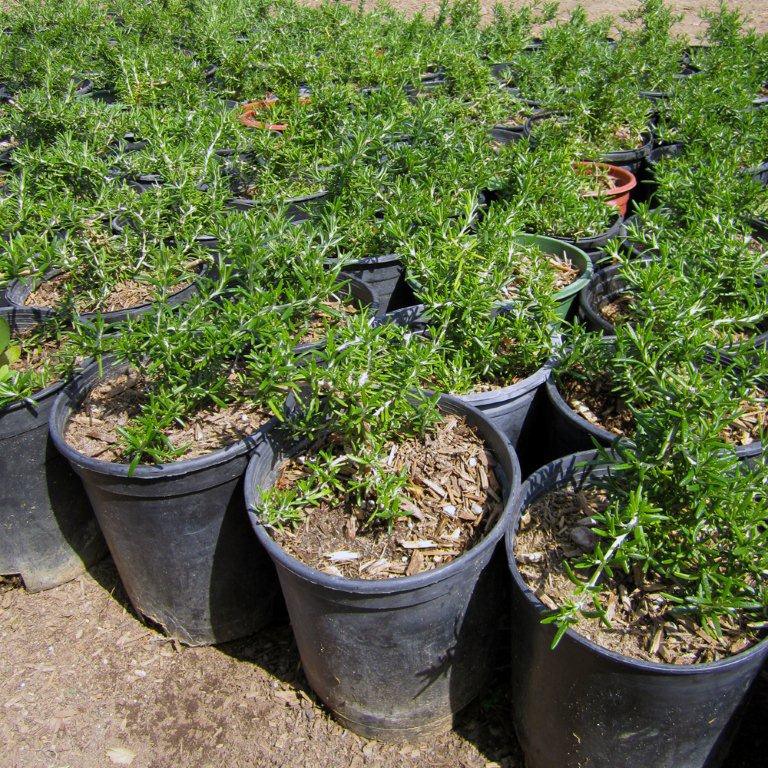
Flat (Soil Tray)
to
is
per unit when ordering a full box of
4.0
units.
Shipping
1 Gallon
to
is
per unit when ordering a full box of
4.0
units.
Edit my zipcode
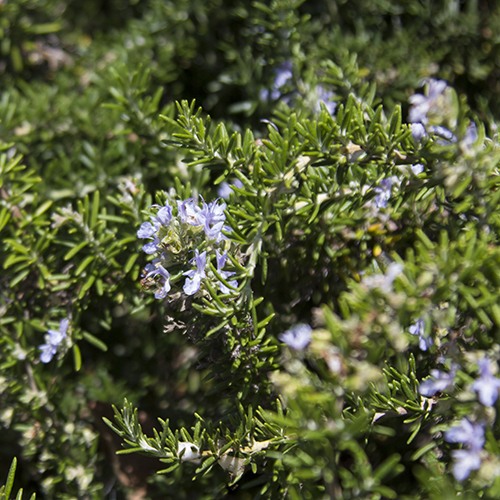
- Rosmarinus officinalis ‘Prostratus’, commonly known as Prostrate Rosemary, is a low growing, trailing form of rosemary that brings both function and softness into the landscape. It’s a great option when you want something edible that also works as a design element.
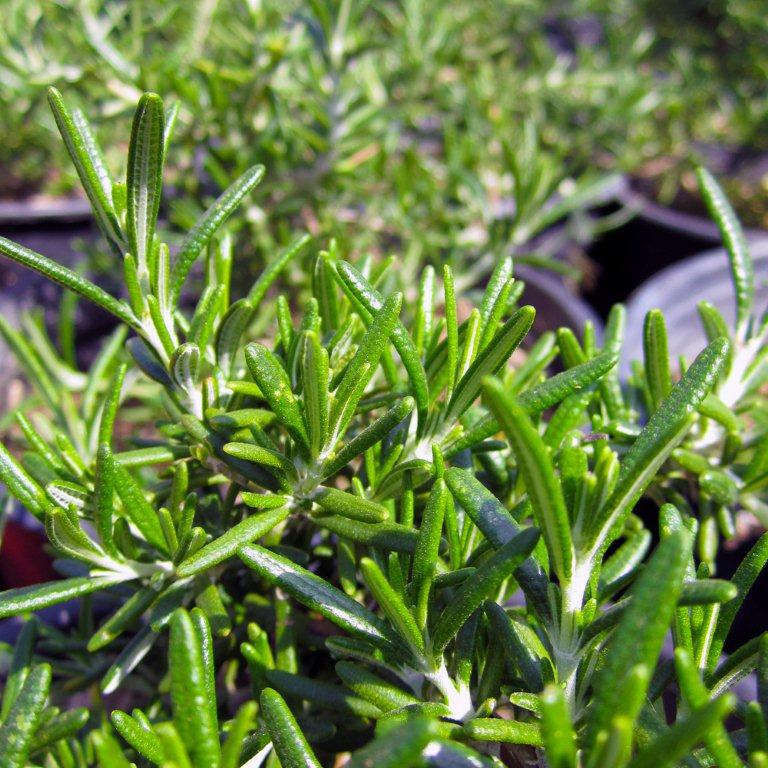
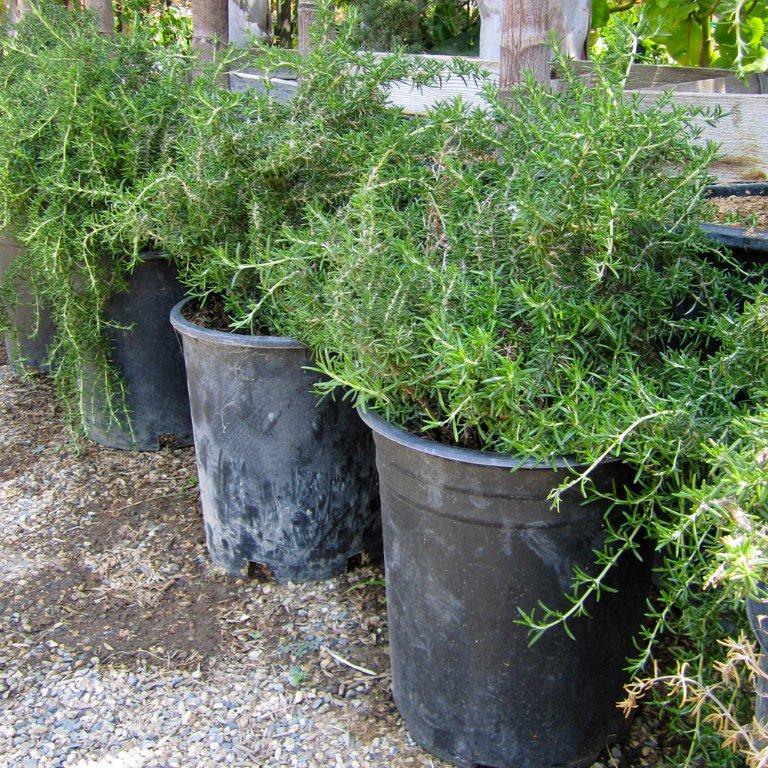
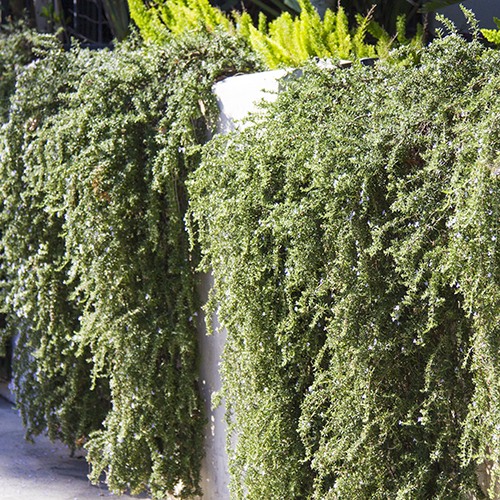
- The foliage is made up of narrow, aromatic, deep green leaves that release that classic rosemary scent when brushed. It forms a dense, spreading mass that can cascade over edges or fill in space along the ground.
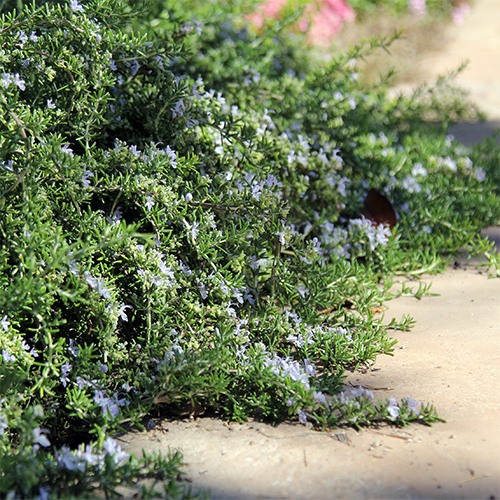
- In late winter through spring, it produces small blue to lavender flowers that attract pollinators and add a subtle layer of color. The blooms aren’t overpowering, but they add a nice seasonal touch.
- Its trailing habit makes it especially useful for spilling over retaining walls, softening the edges of raised planters, or covering slopes. It can also be used as a groundcover alternative in low water landscapes.
- Rosmarinus ‘Prostratus’ grows best in full sun and requires well drained soil. Once established, it is highly drought tolerant and thrives in warm, dry conditions.
- It typically stays around 1 to 2 feet tall but can spread 4 to 8 feet wide, forming a low, cascading layer. It is well suited for USDA zones 8 through 11. The foliage is evergreen.
- This plant has low toxicity and is generally safe for gardens with pets and children.
- The flowers attract pollinators such as bees.
- It is generally deer resistant.
- Rosmarinus officinalis ‘Prostratus’ fits especially well into Mediterranean, coastal, and edible garden designs, where it can be used for groundcover, erosion control, and softening hardscape.
- It pairs well with plants like Leonotis leonurus (Lion’s Tail) to add height and bold seasonal color, Salvia microphylla ‘Hot Lips’ for continuous blooms and contrast, Lavandula species to reinforce that Mediterranean palette, and Thymus serpyllum (Creeping Thyme) as a low, complementary ground layer.
- Expert Tip:
- I like using this along walls or raised planters where it can spill over naturally. That trailing habit is really where it shines, and placing it at an edge instead of flat ground makes a big difference in how much visual impact it has.
- — Nick from Rooted Theory
Foliage:
Evergreen
Sun Exposure:
Full Sun (6+ Hours Of Direct Sunlight)
Water Needs:
Low,
Low to Moderate
Form:
Prostrate
Mature Height:
1-2'
Mature Width:
6-7'
Proper planting technique will help your plants thrive! Follow these simple steps to help your plants establish quickly, develop a strong root system, and live longer:
- Properly dig the hole
- Amend the soil to suit each particular plant
- Place the plant and backfill the soil
- Provide ample water for each particular plant
- Review our how to plant guide!
For detailed information, please download our planting guides: