
Sticky Monkey Flower
Mimulus aurantiacus 'Jelly Bean Orange'
Sticky Monkey Flower
Mimulus aurantiacus 'Jelly Bean Orange'
Mimulus aurantiacus 'Jelly Belly', commonly known as Sticky Monkey Flower, is a vibrant California native shrub that brings bright color and ecological value into the landscape. It’s an important part of the chaparral plant community, naturally adapted to dry summers, rocky soils, and full sun exposure.
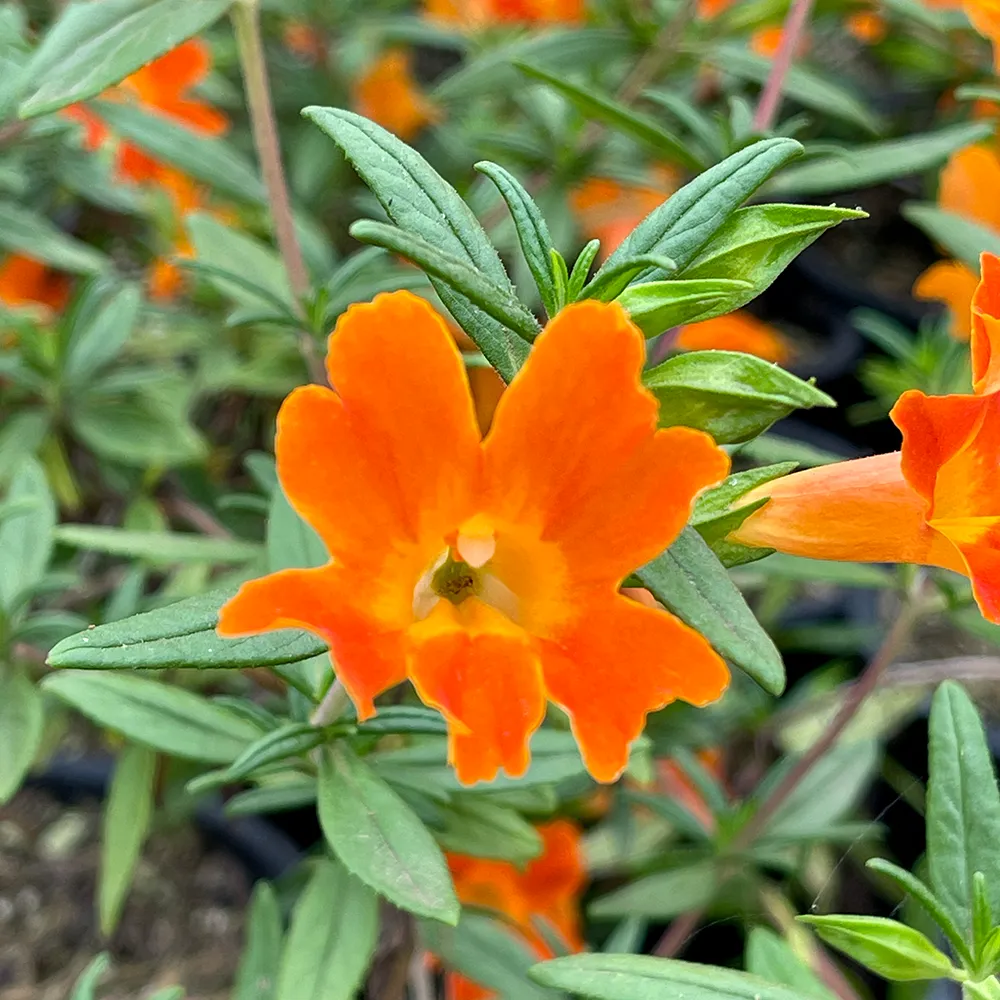
The foliage is narrow, slightly sticky, and medium green, forming an open, somewhat airy structure. The leaves have a subtle sheen and contribute to its drought tolerance.
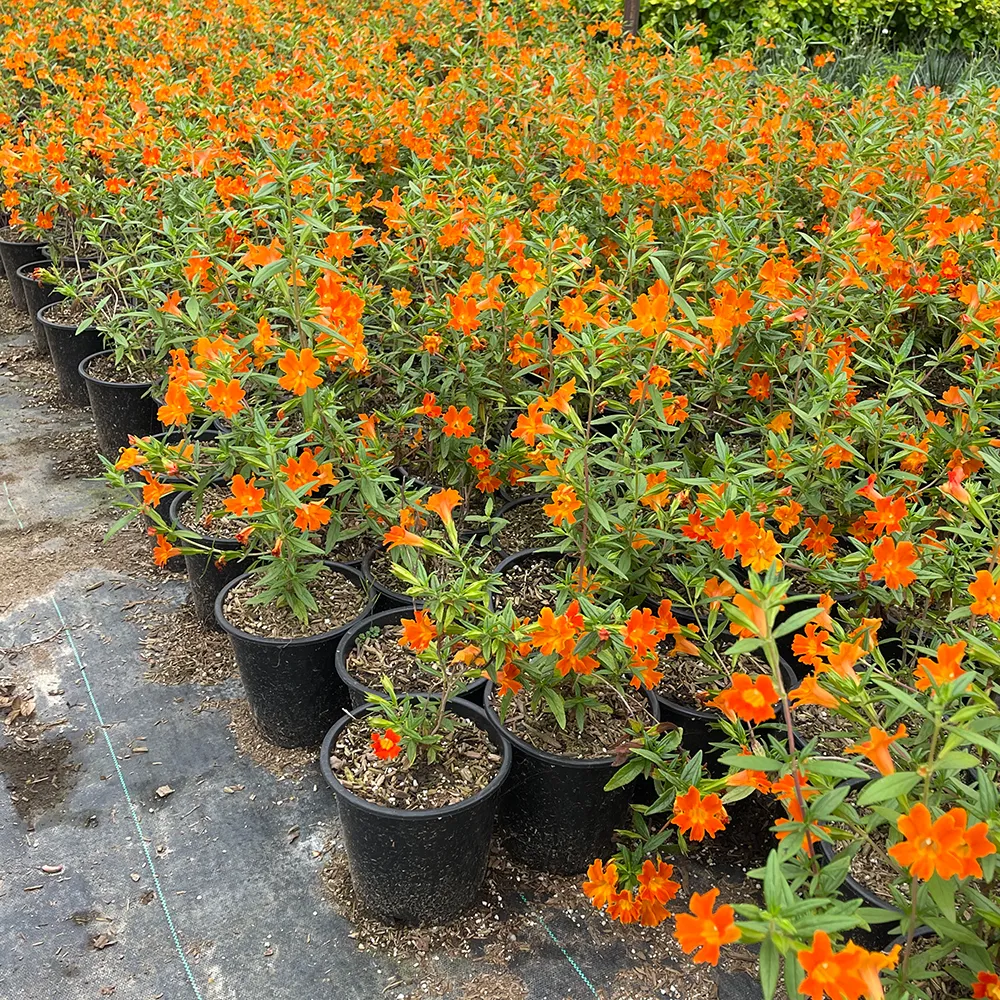
From spring through early summer, it produces tubular flowers in shades of orange, though some selections can range from yellow to red. The blooms are vivid and highly attractive to hummingbirds, creating movement and seasonal interest.
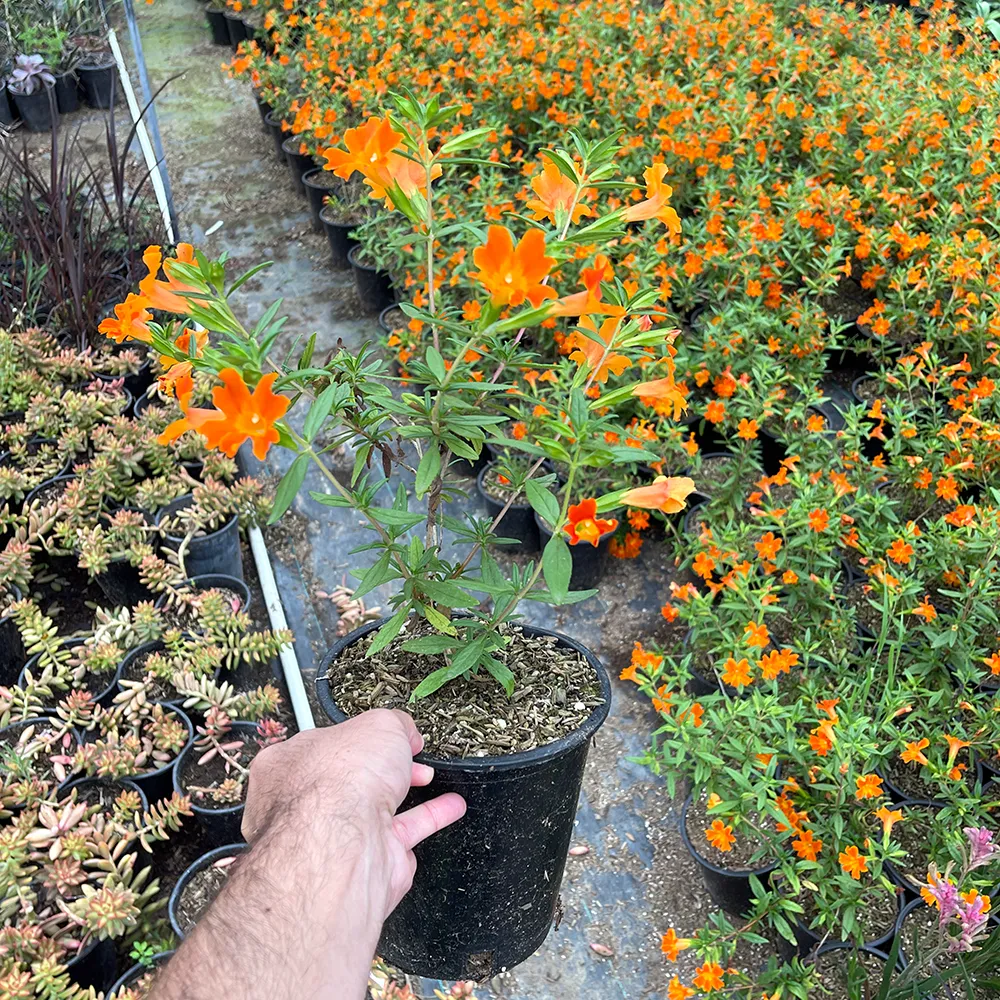
It has a naturally loose, upright growth habit, making it well suited for naturalistic plantings, slopes, or as part of a native garden palette.
Mimulus aurantiacus grows best in full sun to partial shade and requires well drained soil. As a chaparral species, it thrives with minimal summer water once established.
It typically reaches about 3 to 5 feet tall and wide, forming a lightly structured shrub. It is well suited for USDA zones 8 through 10. The foliage is evergreen.
This plant has low toxicity and is generally safe for gardens with pets and children.
The flowers attract pollinators such as bees and are especially attractive to hummingbirds.
It is generally deer resistant.
Mimulus aurantiacus fits especially well into native, Mediterranean, and drought tolerant garden designs, where it can be used to create a cohesive, ecologically appropriate planting.
It pairs well with plants like Salvia apiana to reinforce a chaparral palette, Eriogonum fasciculatum to add seasonal blooms and texture, and Arctostaphylos ‘Pacific Mist’ to create a layered native groundcover.
Expert Tip:
Place this in full sun with excellent drainage and avoid heavy summer watering, because it is adapted to dry chaparral conditions and can decline with excess moisture. Light pruning after flowering will help maintain shape and encourage fresh growth.
— Nick from Rooted Theory
Proper planting technique will help your plants thrive! Follow these simple steps to help your plants establish quickly, develop a strong root system, and live longer:
- Properly dig the hole
- Amend the soil to suit each particular plant
- Place the plant and backfill the soil
- Provide ample water for each particular plant
- Review our how to plant guide!
For detailed information, please download our planting guides: