
Joyce Coulter Mountain Lilac
Ceanothus 'Joyce Coulter'
Joyce Coulter Mountain Lilac
Ceanothus 'Joyce Coulter'
Ceanothus ‘Joyce Coulter’, commonly known as California Lilac, is a low growing, spreading evergreen shrub valued for its vibrant blooms and excellent groundcover habit. It’s a staple in native and drought tolerant landscapes, especially within the chaparral plant community.
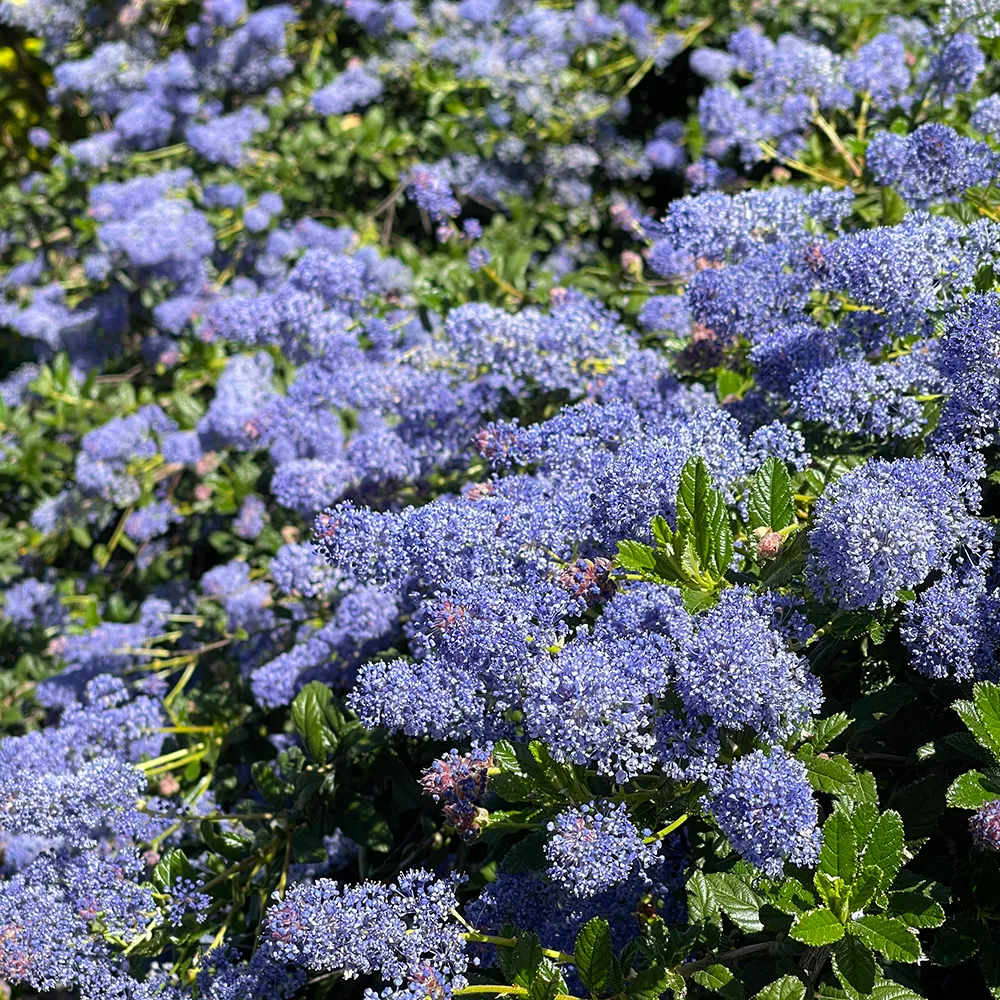
The foliage is small, deep green, and slightly glossy, forming a dense, layered mat that provides year-round coverage. Its low, spreading structure makes it ideal for covering slopes and stabilizing soil.
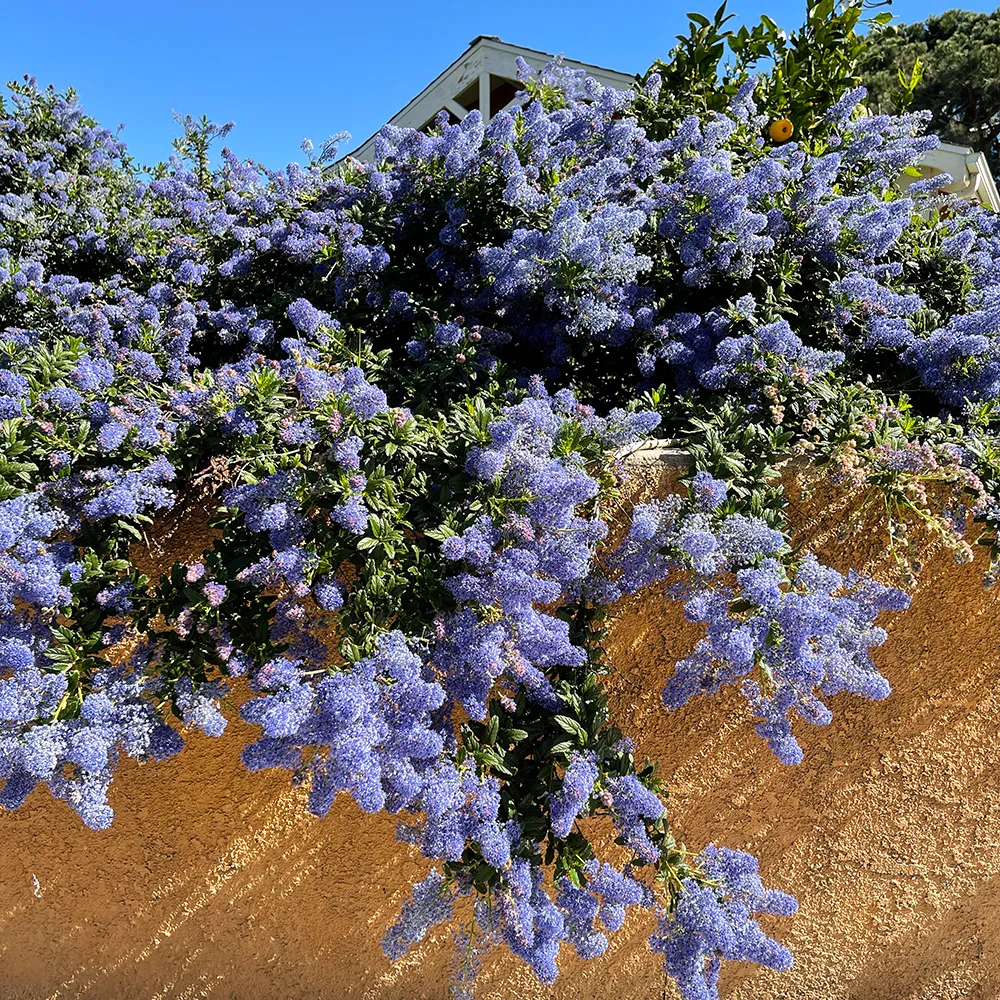
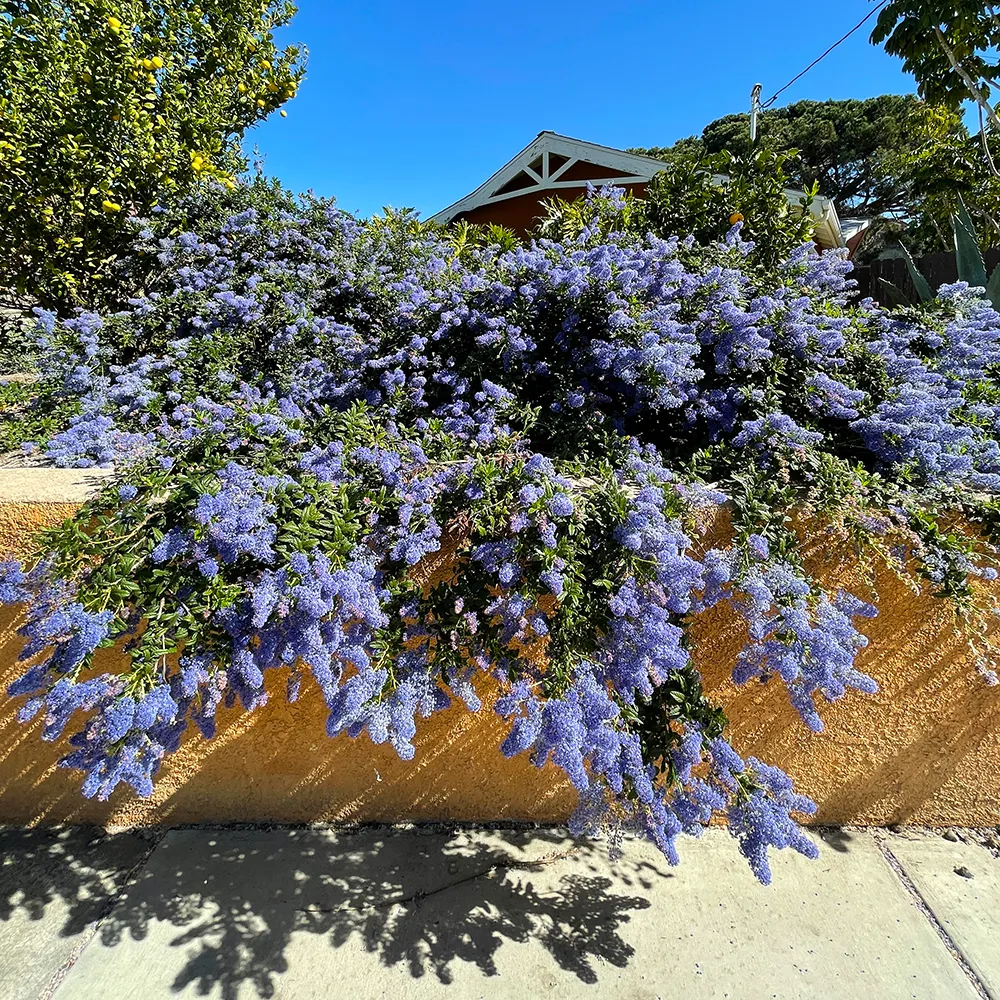
In spring, it produces an impressive display of soft to vivid blue flower clusters that blanket the plant. The blooms create a striking contrast against the dark foliage and are highly attractive to pollinators.
It has a naturally prostrate growth habit, allowing it to cascade over slopes, walls, or spread across open areas as a groundcover.
As part of the chaparral plant community, it is well adapted to dry summers and thrives in low water conditions once established.
Ceanothus ‘Joyce Coulter’ grows best in full sun and requires well drained soil. Like most ceanothus, it performs best with minimal to no summer irrigation.
It typically stays around 2 to 3 feet tall and can spread 8 to 12 feet wide, forming a broad, dense groundcover. It is well suited for USDA zones 8 through 10. The foliage is evergreen.
This plant has low toxicity and is generally safe for gardens with pets and children.
The flowers attract pollinators such as bees.
It is generally deer resistant.
Ceanothus ‘Joyce Coulter’ fits especially well into native, Mediterranean, and hillside garden designs, where it can be used to create expansive, drought tolerant groundcover.
It pairs well with plants like Arctostaphylos ‘Emerald Carpet’ to reinforce a native groundcover palette, Salvia apiana to add vertical structure and contrast, and Muhlenbergia rigens to introduce movement and texture.
Expert Tip:
Place this in full sun with excellent drainage and avoid summer watering, because it is adapted to dry chaparral conditions and can decline with excess moisture. Allowing it to spread naturally will create a dense, weed-suppressing groundcover.
— Nick from Rooted Theory
Proper planting technique will help your plants thrive! Follow these simple steps to help your plants establish quickly, develop a strong root system, and live longer:
- Properly dig the hole
- Amend the soil to suit each particular plant
- Place the plant and backfill the soil
- Provide ample water for each particular plant
- Review our how to plant guide!
For detailed information, please download our planting guides: