
Variegated Coast Rosemary
Westringia fruticosa 'Morning Light
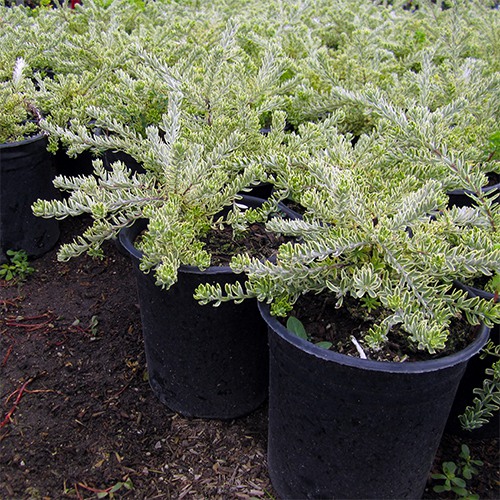
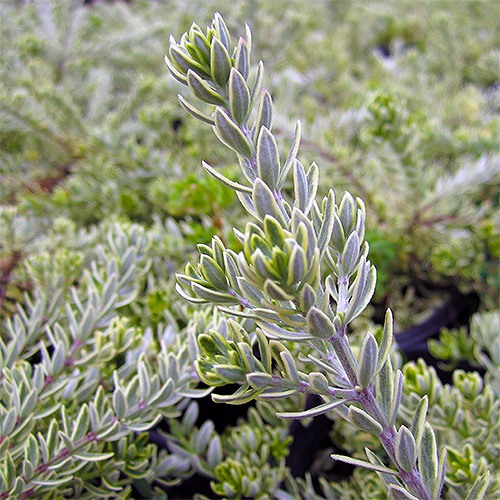
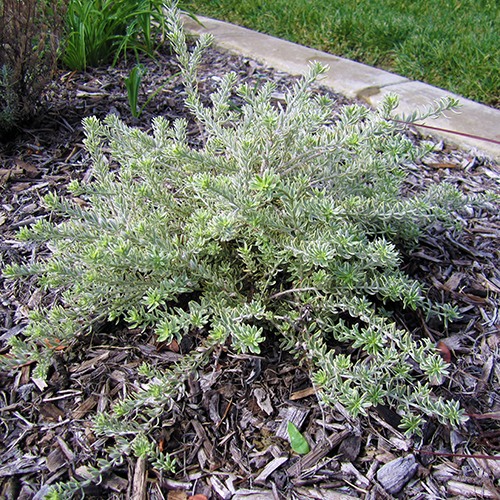
Variegated Coast Rosemary
Westringia fruticosa 'Morning Light
Westringia fruticosa ‘Morning Light’, commonly known as Coastal Rosemary, is a refined, evergreen shrub that brings soft color and structure into the landscape. It’s especially valued for its bright, variegated foliage and clean, adaptable form.
The foliage is narrow and needle-like, with soft green centers and creamy white margins that give the plant a light, almost glowing appearance. The variegation adds contrast and helps brighten planting areas, especially when used in repetition.
It forms a naturally dense, rounded shape that can be left informal or lightly pruned into a more structured hedge. Its compact growth habit makes it versatile for borders, mass plantings, or as a low to mid-level screen.
Throughout the year, it produces small, pale lavender to white flowers that are subtle but add a gentle seasonal detail.
Westringia ‘Morning Light’ grows best in full sun to partial shade and prefers well drained soil. Once established, it is drought tolerant and performs well in coastal and inland conditions.
It typically reaches about 4 to 6 feet tall and wide, forming a full, rounded shrub. It is well suited for USDA zones 9 through 11. The foliage is evergreen.
This plant has low toxicity and is generally safe for gardens with pets and children.
The flowers attract pollinators such as bees.
It is generally deer resistant.
Westringia fruticosa ‘Morning Light’ fits especially well into Mediterranean, coastal, and modern garden designs, where its variegation and structure can be used to create contrast and cohesion.
It pairs well with plants like Leucophyllum frutescens to create a soft, silvery contrast, Grevillea ‘Moonlight’ to reinforce an Australian palette with seasonal blooms, and Ruschia ‘Nana’ to add a clean, low growing groundcover beneath.
Expert Tip:
Place this in full sun to bring out the brightest variegation, because stronger light enhances the contrast in the foliage. Occasional pruning will help maintain a dense, compact form and keep it looking crisp.
— Nick from Rooted Theory
Proper planting technique will help your plants thrive! Follow these simple steps to help your plants establish quickly, develop a strong root system, and live longer:
- Properly dig the hole
- Amend the soil to suit each particular plant
- Place the plant and backfill the soil
- Provide ample water for each particular plant
- Review our how to plant guide!
For detailed information, please download our planting guides: