
Chinese Pistache
Pistacia chinensis
Chinese Pistache
Pistacia chinensis
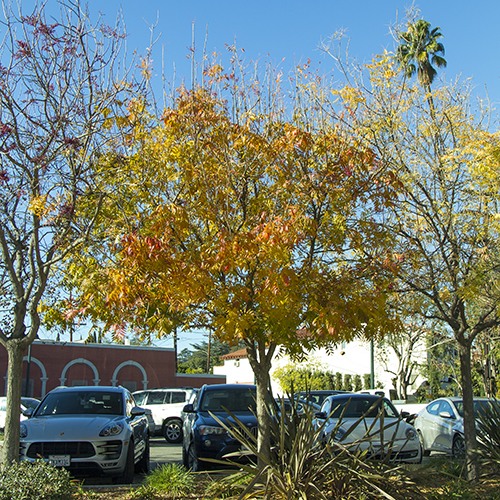
Pistacia chinensis, commonly known as Chinese Pistache, is a durable, deciduous tree prized for its shade, structure, and outstanding fall color. It’s a reliable choice for larger landscapes where you want a strong, long-term canopy tree.
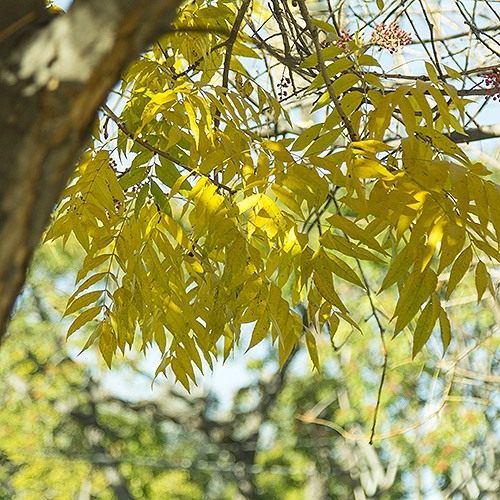
The foliage is made up of compound leaves with multiple narrow leaflets, giving it a fine, textured appearance. During the growing season, the leaves are a rich green, forming a dense canopy that provides excellent shade.
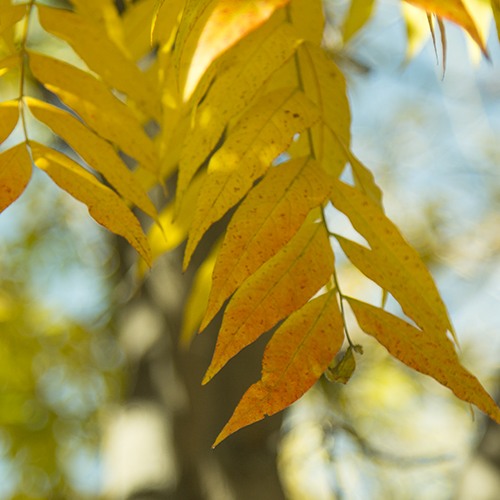
In fall, the tree puts on a vibrant display of color, transitioning into shades of orange, red, and sometimes deep crimson. This seasonal change makes it one of the more striking shade trees for autumn interest.
It develops a rounded to slightly spreading canopy over time, with a sturdy branching structure that holds up well in a variety of conditions. Once established, it becomes a dependable and low-maintenance tree.
Pistacia chinensis grows best in full sun and prefers well drained soil. It is highly drought tolerant once established and performs well in heat, wind, and urban conditions.
It typically reaches about 25 to 40 feet tall and wide, forming a broad, rounded canopy. It is well suited for USDA zones 6 through 10. The foliage is deciduous.
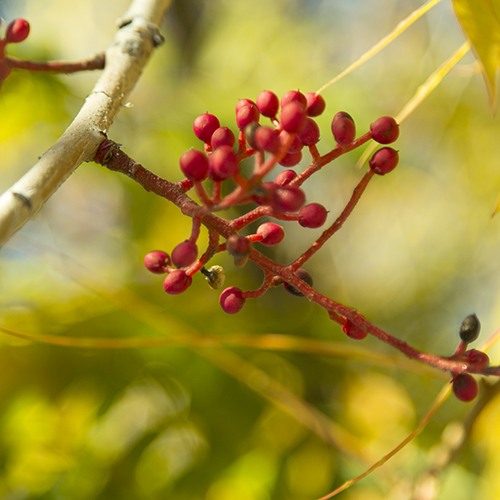
This plant has low toxicity, though the fruit (on female trees) may produce small berries that can drop.
The flowers attract pollinators such as bees.
It is generally deer resistant.
Pistacia chinensis fits especially well into Mediterranean, urban, and large scale landscape designs, where its shade and seasonal color can be used to anchor a space.
It pairs well with plants like Muhlenbergia capillaris to echo seasonal color with soft texture, Lavandula ‘Provence’ to create a drought tolerant understory, and Salvia greggii ‘Alba’ to add long-season flowering beneath the canopy.
Expert Tip:
Place this where it has room to develop a full canopy, because its mature form creates the most impact. Providing deep, infrequent watering during establishment will also help encourage a strong, drought tolerant root system.
— Nick from Rooted TheoryPistacia chinensis, commonly known as Chinese Pistache, is a durable, deciduous tree prized for its shade, structure, and outstanding fall color. It’s a reliable choice for larger landscapes where you want a strong, long-term canopy tree.
The foliage is made up of compound leaves with multiple narrow leaflets, giving it a fine, textured appearance. During the growing season, the leaves are a rich green, forming a dense canopy that provides excellent shade.
In fall, the tree puts on a vibrant display of color, transitioning into shades of orange, red, and sometimes deep crimson. This seasonal change makes it one of the more striking shade trees for autumn interest.
It develops a rounded to slightly spreading canopy over time, with a sturdy branching structure that holds up well in a variety of conditions. Once established, it becomes a dependable and low-maintenance tree.
Pistacia chinensis grows best in full sun and prefers well drained soil. It is highly drought tolerant once established and performs well in heat, wind, and urban conditions.
It typically reaches about 25 to 40 feet tall and wide, forming a broad, rounded canopy. It is well suited for USDA zones 6 through 10. The foliage is deciduous.
This plant has low toxicity, though the fruit (on female trees) may produce small berries that can drop.
The flowers attract pollinators such as bees.
It is generally deer resistant.
Pistacia chinensis fits especially well into Mediterranean, urban, and large scale landscape designs, where its shade and seasonal color can be used to anchor a space.
It pairs well with plants like Muhlenbergia capillaris to echo seasonal color with soft texture, Lavandula ‘Provence’ to create a drought tolerant understory, and Salvia greggii ‘Alba’ to add long-season flowering beneath the canopy.
Expert Tip:
Place this where it has room to develop a full canopy, because its mature form creates the most impact. Providing deep, infrequent watering during establishment will also help encourage a strong, drought tolerant root system.
— Nick from Rooted Theory
Proper planting technique will help your plants thrive! Follow these simple steps to help your plants establish quickly, develop a strong root system, and live longer:
- Properly dig the hole
- Amend the soil to suit each particular plant
- Place the plant and backfill the soil
- Provide ample water for each particular plant
- Review our how to plant guide!
For detailed information, please download our planting guides: