
Evergreen Pear
Pyrus kawakamii
Evergreen Pear
Pyrus kawakamii
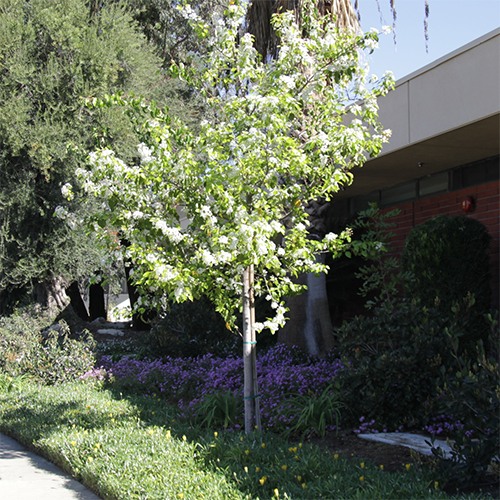
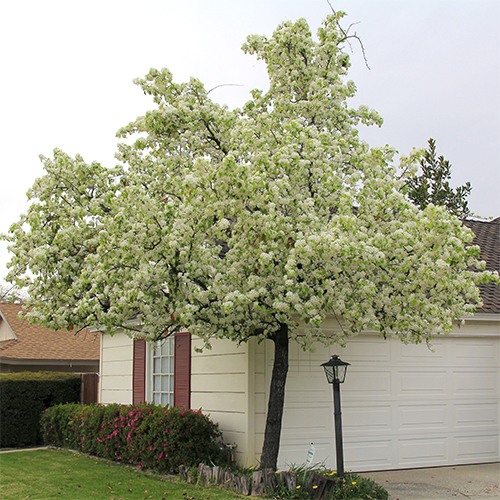
Pyrus kawakamii, commonly known as Evergreen Pear, is a fast growing tree that’s often used when you want quick shade or a full, leafy presence. It has a naturally rounded canopy and dense branching, which gives it a full, almost umbrella like shape as it matures.
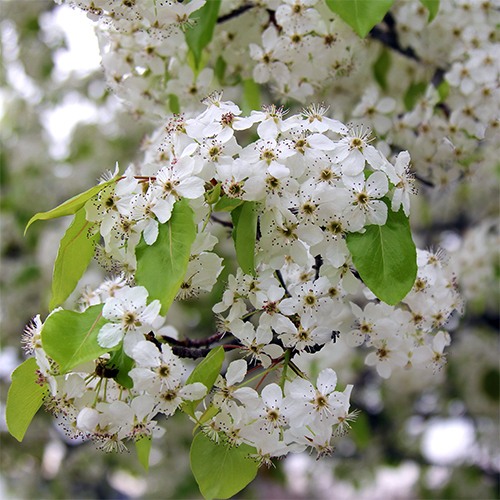
The foliage is glossy, deep green, and stays on the tree year round in mild climates, which makes it especially useful compared to deciduous pears. In late winter to early spring, the tree becomes covered in clusters of small white flowers, creating a bright, airy display that stands out against the dark leaves.
It’s a popular choice for street trees, larger yards, or areas where you need a bit of height and coverage without waiting too long. The growth rate is fairly quick, so it can establish presence in the landscape relatively fast.
Pyrus kawakamii grows best in full sun and prefers well drained soil. It’s adaptable to a range of conditions once established and can handle heat, urban environments, and moderate drought.
Given space, it can reach around 20 to 30 feet tall and about as wide, forming a broad canopy. It is well suited for USDA zones 9 through 11 and is sensitive to hard frost, with damage possible below around 25 to 28 degrees Fahrenheit. The foliage is evergreen in warmer climates.
This plant has low toxicity and is generally a safe choice for gardens with pets and children.
The flowers can attract pollinators such as bees. However, the blooms can also emit an undesirable scent.
It is generally deer resistant, though young trees may need some protection. Rabbits may occasionally nibble tender growth.
Pyrus kawakamii fits especially well into Mediterranean, urban, and contemporary landscapes, where it can be used for shade, screening, or as a structural tree.
With its fast growth, dense canopy, and seasonal blooms, this is a solid choice when you need a tree that fills in quickly and provides year round presence.
Expert Tip:
I like to stay ahead of pruning with this tree rather than letting it get too dense. It tends to fill in quickly, so thinning out interior branches helps improve airflow and keeps the canopy from getting too heavy. I’ll also shape it early on to establish a clean structure, which makes a big difference in how it looks long term.
— Nick from Rooted Theory
Proper planting technique will help your plants thrive! Follow these simple steps to help your plants establish quickly, develop a strong root system, and live longer:
- Properly dig the hole
- Amend the soil to suit each particular plant
- Place the plant and backfill the soil
- Provide ample water for each particular plant
- Review our how to plant guide!
For detailed information, please download our planting guides: