
Santa Rosa Plum Tree
Prunus salicina
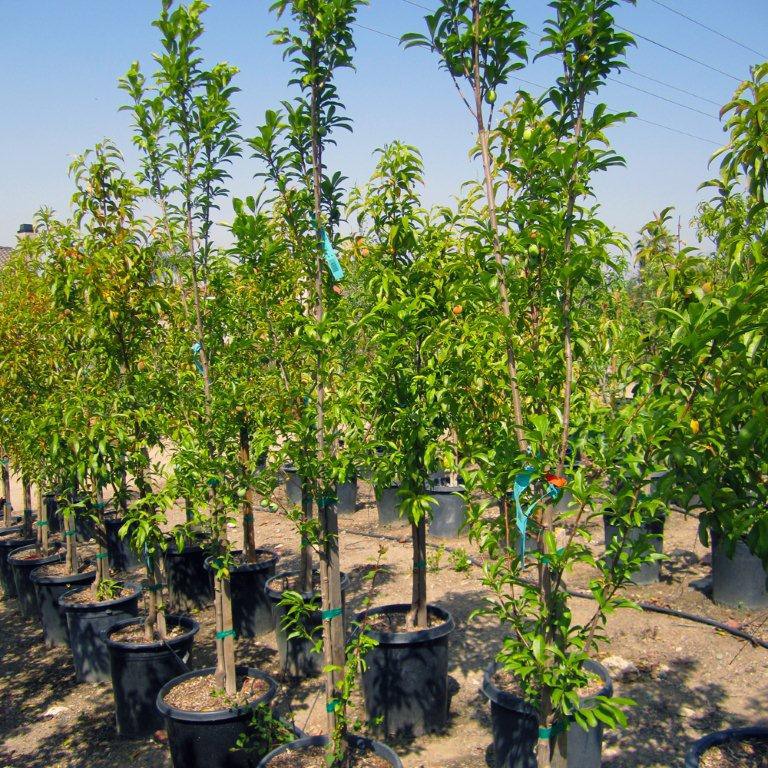
Santa Rosa Plum Tree
Prunus salicina
- Santa Rosa Plum Tree is one of the most popular fruiting trees for home gardens, and for good reason—it’s productive, relatively easy to grow, and the fruit is hard to beat.
- The plums are medium sized with reddish purple skin and a sweet, juicy flesh that has just enough tartness to keep things interesting. They’re great eaten fresh, but also work well for jams, baking, or just picking straight off the tree in summer.
- In early spring, the tree is covered in soft white blossoms before the leaves fully fill in. It’s a really nice seasonal moment, and those flowers also help support pollinators early in the year.
- The tree itself has a rounded, slightly spreading canopy and fits well into backyard orchards or even as a standalone feature in a landscape. It’s not overly large, which makes it manageable for most residential spaces.
- Santa Rosa Plum grows best in full sun and prefers well drained soil. Regular watering is important, especially during fruit development, but good drainage is key to keeping the tree healthy. Pruning helps maintain shape and encourages better fruit production.
- It typically reaches about 15 to 25 feet tall and wide, though it can be kept smaller with pruning. It is well suited for USDA zones 5 through 9 and requires some winter chill to produce fruit reliably. The foliage is deciduous. Although sources show this plant up to zone 9, we see it performing in some Zone 10 areas of Southern California with proper conditions and chill hours.
- This plant has low toxicity and is generally a safe choice for gardens with pets and children.
- The flowers attract pollinators such as bees, and the fruit is enjoyed by both people and wildlife.
- It is generally deer resistant, though fruiting trees may occasionally be browsed. Birds will often go after the fruit if not protected.
- Santa Rosa Plum fits especially well into edible gardens, Mediterranean landscapes, and backyard orchard designs, where it can provide both seasonal beauty and a productive harvest.
- Expert Tip:
- I like using Santa Rosa plum in smaller yards where you still want that “fruit tree experience” without committing to something massive. It’s also one of those trees that people actually end up using—fruit doesn’t just sit there. If you stay on top of pruning, you can keep it at a really manageable size and still get a solid harvest.
- — Nick from Rooted Theory
Sun Exposure:
Full Sun (6+ Hours Of Direct Sunlight)
Bloom Season:
Spring
Foliage:
Deciduous
Water Needs:
Moderate to Regular,
Regular
Form:
Upright Rounded Canopy
Mature Width:
18-22'
Mature Height:
18-22'
Proper planting technique will help your plants thrive! Follow these simple steps to help your plants establish quickly, develop a strong root system, and live longer:
- Properly dig the hole
- Amend the soil to suit each particular plant
- Place the plant and backfill the soil
- Provide ample water for each particular plant
- Review our how to plant guide!
For detailed information, please download our planting guides: