
Purple Leaf Plum
Prunus cerasifera 'Krauter Vesuvius'
Purple Leaf Plum
Prunus cerasifera 'Krauter Vesuvius'
Prunus cerasifera ‘Krauter Vesuvius’, commonly known as Purple Leaf Plum, is a striking ornamental tree known for its deep burgundy foliage and strong seasonal presence. It’s often used when you want to introduce contrast and color without relying on flowers alone.
The leaves emerge a rich reddish purple in early spring and hold that tone through much of the growing season. That darker foliage creates a bold backdrop and pairs especially well with lighter greens and silvery plants.
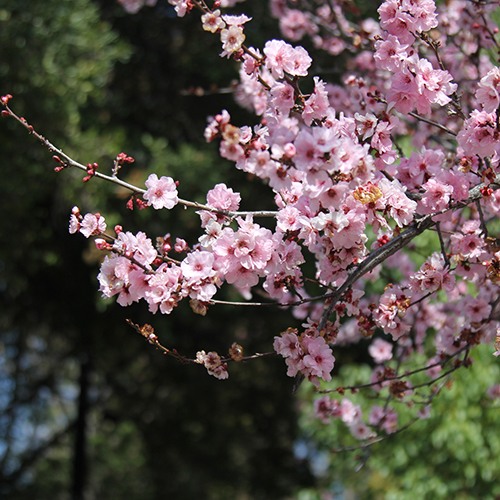
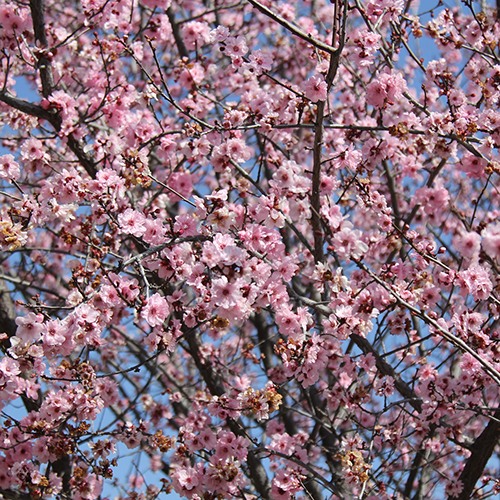
Before the leaves fully emerge, the tree produces a flush of soft pink to pale blush flowers along the branches. This early bloom adds a nice seasonal moment and softens the otherwise dramatic look of the tree.
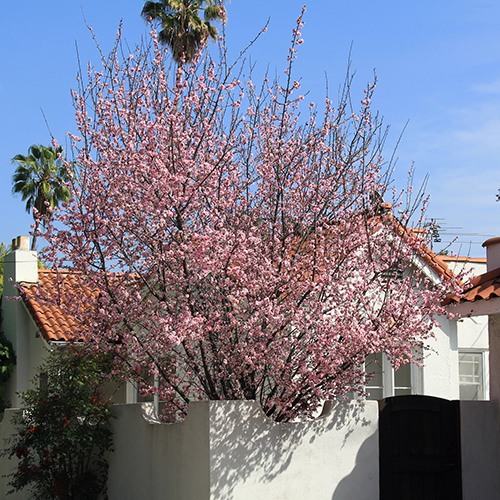
It has a rounded canopy and a relatively moderate growth rate, making it a good option for smaller landscapes or as a focal tree in a planting.
Prunus ‘Krauter Vesuvius’ grows best in full sun and prefers well drained soil. Regular watering helps keep the foliage looking its best, especially in warmer climates.
It typically reaches about 15 to 20 feet tall and wide, forming a dense, rounded canopy. It is well suited for USDA zones 5 through 9. The foliage is deciduous. It also does very well in zone 10 here in Southern California, California.
This plant has low toxicity and is generally a safe choice for gardens with pets and children, though the pits should not be consumed.
The flowers attract pollinators such as bees.
It is generally deer resistant, though occasional browsing may occur.
Prunus cerasifera ‘Krauter Vesuvius’ fits especially well into Mediterranean, formal, and residential garden designs, where its foliage color can be used to create contrast and focal points.
It pairs well with plants like Pittosporum tenuifolium ‘Silver Sheen’ to lighten and soften the overall palette, Lomandra longifolia for a clean, structured base layer, and Agapanthus orientalis to repeat form while adding seasonal blooms.
Expert Tip:
I like using this as a contrast piece in the landscape. That dark foliage can anchor a planting, but it’s important to balance it with lighter plants around it so it doesn’t feel too heavy. A little spacing also helps the canopy read clean and intentional. I have seen these flank entries and they do a great job because of the predictable growth.
— Nick from Rooted Theory
Proper planting technique will help your plants thrive! Follow these simple steps to help your plants establish quickly, develop a strong root system, and live longer:
- Properly dig the hole
- Amend the soil to suit each particular plant
- Place the plant and backfill the soil
- Provide ample water for each particular plant
- Review our how to plant guide!
For detailed information, please download our planting guides: