
Tuscarora Crape Myrtle - Standard Trunk
Lagerstroemia 'Tuscarora'
Tuscarora Crape Myrtle - Standard Trunk
Lagerstroemia 'Tuscarora'
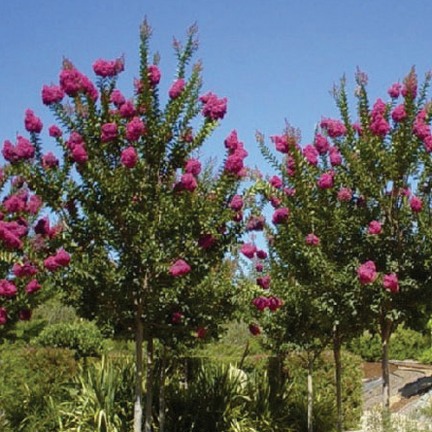
Tuscarora Crape Myrtle in standard trunk form is a classic flowering tree that brings strong summer color and a clean, upright structure into the landscape. With its defined trunk and elevated canopy, it works well in more formal or intentional designs.
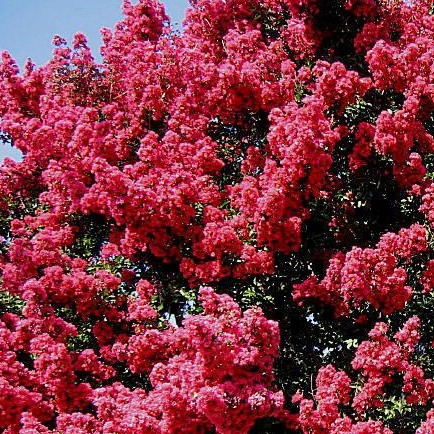
The flowers are a vibrant coral to salmon pink and appear in large clusters during the summer months. When in full bloom, the canopy can be covered in color, making it a standout feature during a time when many other trees are more subdued.
The foliage is a rich green through the growing season, then shifts to warm tones in fall before dropping. In winter, the smooth, exfoliating bark becomes more visible, adding subtle seasonal interest.
Because it’s trained as a standard, it creates a more tree like presence compared to multi trunk forms. It’s often used along streets, in courtyards, or as a focal point where a clean vertical element is needed.
Tuscarora Crape Myrtle grows best in full sun and prefers well drained soil. It is relatively drought tolerant once established and handles heat well, making it a reliable choice for warm climates. Additionally, this variety is mold resistant as opposed to other varieties.
In standard form, it typically reaches about 15 to 20 feet tall with a canopy spread of around 10 to 15 feet. It is well suited for USDA zones 6 through 9 and performs well in a wide range of conditions. The foliage is deciduous. This plant can also thrive in Zone 10 as we often see it in Southern California landscapes.
This plant has low toxicity and is generally a safe choice for gardens with pets and children.
The flowers attract pollinators such as bees.
It is generally deer resistant, though occasional browsing may occur.
Tuscarora Crape Myrtle fits especially well into Mediterranean, formal, and urban garden designs, where its structure and summer color can be used as a focal point.
Expert Tip:
I like to keep the canopy opened up a bit with selective pruning rather than letting it get too dense. It improves airflow, helps with flowering, and keeps that clean tree form intact. A little annual maintenance goes a long way with this one.
— Nick from Rooted Theory
Proper planting technique will help your plants thrive! Follow these simple steps to help your plants establish quickly, develop a strong root system, and live longer:
- Properly dig the hole
- Amend the soil to suit each particular plant
- Place the plant and backfill the soil
- Provide ample water for each particular plant
- Review our how to plant guide!
For detailed information, please download our planting guides: