
Western Redbud - Multi Trunk
Cercis occidentalis
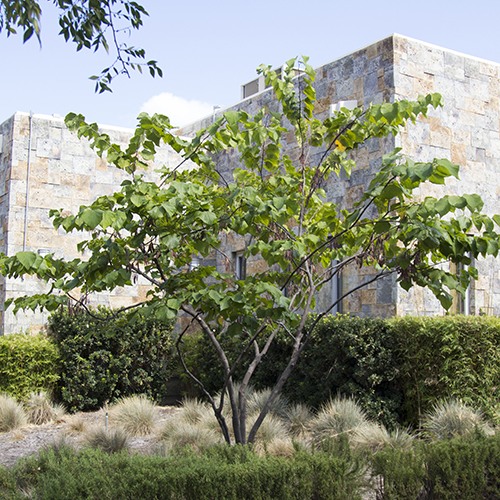
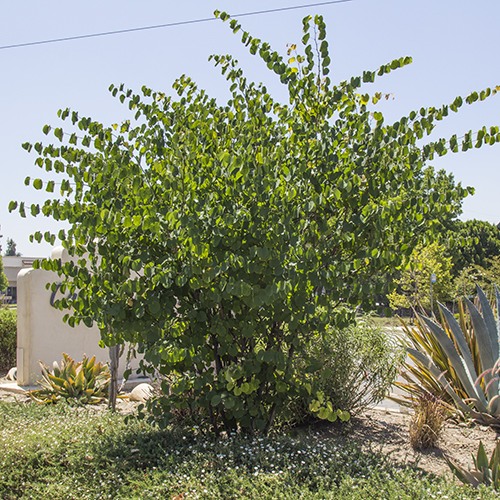
Western Redbud - Multi Trunk
Cercis occidentalis
Cercis occidentalis, commonly known as Western Redbud, is a California native tree that brings strong seasonal interest and a soft, natural form into the landscape. It’s part of the chaparral plant community, making it well adapted to dry summers and low water conditions once established.
In early spring, before the leaves emerge, the branches are covered in vibrant magenta to pink flowers. This creates a really striking moment in the garden, adding color when most plants are still fairly quiet.
As the season progresses, rounded green leaves fill in, creating a soft, filtered canopy. In fall, the foliage can shift to warm yellow tones before dropping, adding another layer of seasonal change.
In multi trunk form, the tree develops a wider, more sculptural presence with multiple stems branching from the base. This gives it a more natural, organic feel and adds visual interest even when it’s not in bloom.
Cercis occidentalis grows best in full sun to partial shade and prefers well drained soil. It benefits from regular watering while establishing, then becomes more drought tolerant over time.
It typically reaches about 10 to 15 feet tall and can spread wider, forming a broad, open canopy. It is well suited for USDA zones 7 through 10. The foliage is deciduous.
This plant has low toxicity and is generally a safe choice for gardens with pets and children.
The flowers attract pollinators such as bees.
It is generally deer resistant, though young growth may occasionally be browsed.
Cercis occidentalis fits especially well into native, Mediterranean, and naturalistic garden designs, where its seasonal bloom and branching structure can be used as a focal point. For the purple/red colored leaf variety, see Cercis 'Forest Pansy'.
It pairs well with plants like Arctostaphylos ‘Howard McMinn’ for a cohesive native palette, Salvia clevelandii ‘Winifred Gilman’ to add color and fragrance, and Myoporum parvifolium ‘Putah Creek’ to create a clean, low groundcover beneath the canopy.
Expert Tip:
This is one that stops me in my tracks when it's in bloom. The multi trunk structure has a lot of character, so giving it space and keeping the lower branching visible really helps show off what makes it special. Begin selectively pruning trees when they're young to encourage a desirable growth structure.
— Nick from Rooted Theory
NOTE: The multitrunk form generally comes in more of a 'bush-like' form. This tree takes some time to develop a full canopy. For more instant height, consider the single/standard trunk version.
Proper planting technique will help your plants thrive! Follow these simple steps to help your plants establish quickly, develop a strong root system, and live longer:
- Properly dig the hole
- Amend the soil to suit each particular plant
- Place the plant and backfill the soil
- Provide ample water for each particular plant
- Review our how to plant guide!
For detailed information, please download our planting guides: