
Paddle Plant
Kalanchoe luciae
Paddle Plant
Kalanchoe luciae
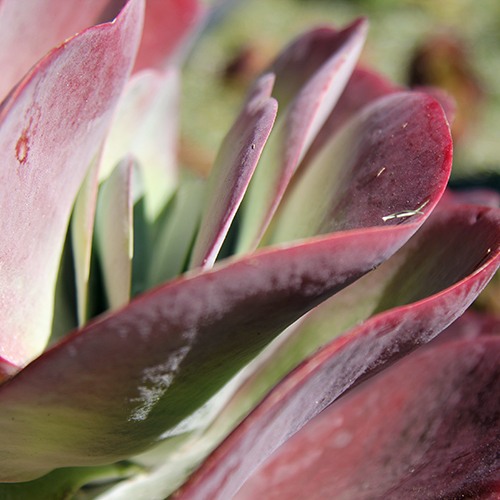
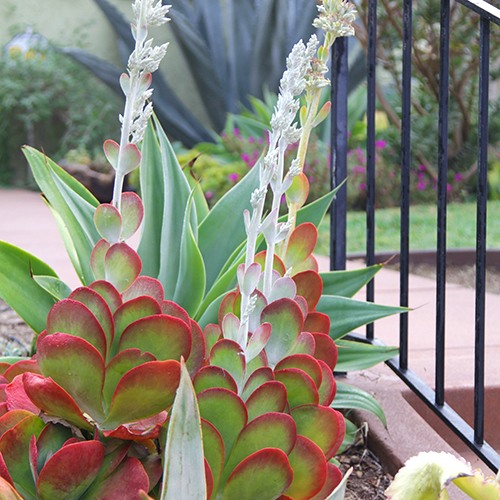
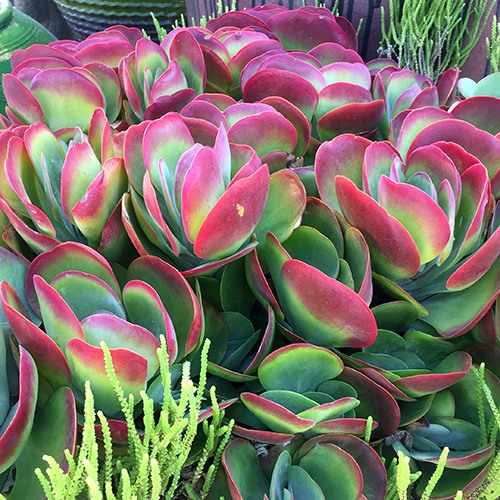
Kalanchoe luciae, often called Paddle Plant or Flapjacks, is one of those succulents that really changes character depending on how much sun it gets. In lower light, it stays a soft, powdery green—but give it plenty of sun, and the leaf edges start to glow with bold red tones.
The plant forms a stacked rosette of broad, flat leaves that almost look like oversized paddles. There’s a clean, sculptural quality to it that works really well in modern or minimalist plantings.
It tends to stay fairly low and wide, making it a good choice for foreground planting, containers, or grouping with other succulents. Over time, it can form small clusters as it offsets, creating a fuller look.
In late winter to early spring, mature plants may send up a tall flower spike with clusters of pale yellow blooms. After flowering, the main rosette may decline, but new offsets usually continue the plant.
Kalanchoe luciae grows best in full sun to partial shade and needs well drained soil. For the best color, more sun is key, though a bit of afternoon protection can help in hotter inland areas. It is drought tolerant once established and prefers infrequent watering.
It typically grows about 1 to 2 feet tall and can spread 1 to 2 feet wide, depending on conditions. It is well suited for USDA zones 9 through 11 and is sensitive to frost, tolerating temperatures down to around 30 degrees Fahrenheit. The foliage is evergreen in mild climates.
This plant has some toxicity and may cause irritation or illness if ingested, so it is best to plant with care around pets and children.
The flowers may attract pollinators such as bees.
It is generally deer and rabbit resistant, making it a dependable option for low maintenance plantings.
Kalanchoe luciae fits especially well into succulent gardens, Mediterranean plantings, and modern designs, where its bold leaf shape and color can be used as a focal point or contrast element.
Expert Tip:
This is one I like using when I want color without relying on flowers. If you give it enough sun, those red edges really light up and create contrast on their own. It also pairs really well with darker succulents or blue tones to make that color stand out even more. Try it with something like Aeonium 'Cyclopse'.
— Nick from Rooted Theory
Proper planting technique will help your plants thrive! Follow these simple steps to help your plants establish quickly, develop a strong root system, and live longer:
- Properly dig the hole
- Amend the soil to suit each particular plant
- Place the plant and backfill the soil
- Provide ample water for each particular plant
- Review our how to plant guide!
For detailed information, please download our planting guides: