
Pork and Beans Sedum
Sedum rubrotinctum
Pork and Beans Sedum
Sedum rubrotinctum
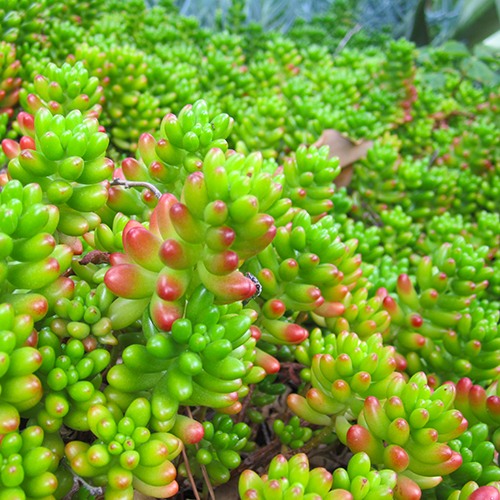
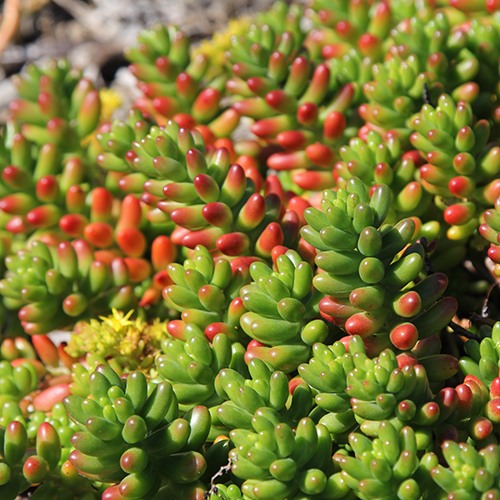
Sedum rubrotinctum, commonly known as Jelly Bean Plant or Pork and Beans, is a playful little succulent that adds both color and texture without trying too hard. Native to Mexico, it’s especially popular for its plump, rounded leaves that really do resemble tiny jelly beans.
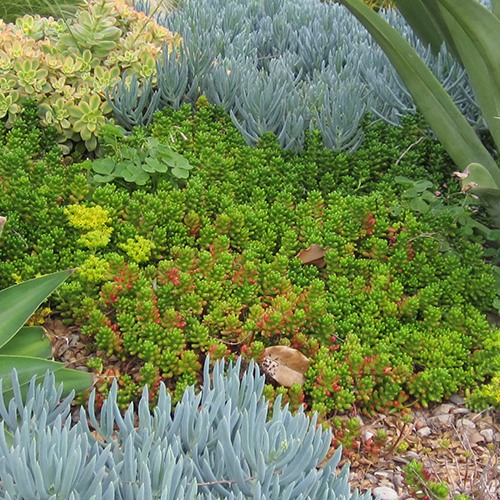
The foliage shifts depending on light—staying green in lower light, but turning shades of red and bronze when grown in full sun or during cooler weather. That color change gives it a bit of personality and makes it fun to mix into different plantings.
It tends to grow low and spread outward, forming a loose mat over time. Stems can trail slightly as they elongate, which makes it a good candidate for containers, rock gardens, or spilling over edges.
In spring, you might see small yellow, star shaped flowers appear, though like many sedums, it’s mostly grown for its foliage.
This plant does best in full sun to partial shade and needs well drained soil. It’s very drought tolerant once established and prefers a light touch when it comes to watering—too much moisture is usually where problems start.
It typically stays around 6 to 12 inches tall and can spread a couple of feet wide over time. It is well suited for USDA zones 9 through 11 and is sensitive to frost, tolerating temperatures down to around 30 degrees Fahrenheit. The foliage is evergreen in mild climates.
One thing to note—those fleshy leaves are fairly delicate and can drop easily if bumped, but the upside is they root readily, so it’s easy to propagate new plants.
This plant has some toxicity and may cause mild irritation or illness if ingested, so it is best to plant with care around pets and children.
The flowers may attract pollinators such as bees.
It is generally deer and rabbit resistant, making it a dependable option for low maintenance plantings.
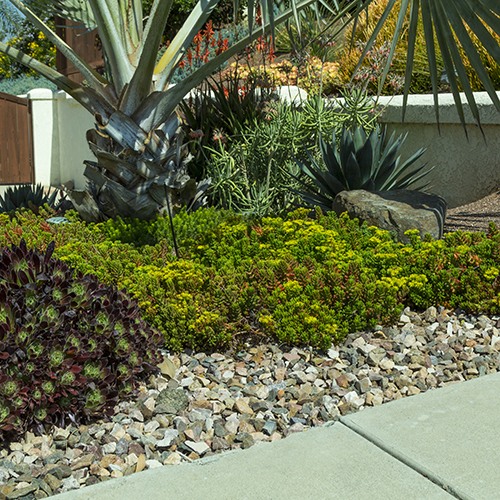
Sedum rubrotinctum fits especially well into succulent gardens, Mediterranean plantings, and container designs, where its color and form can be used to add a bit of fun and contrast.
If you want something easy, a little quirky, and quick to spread, this is a great one to work into the mix.
Expert Tip:
I remember seeing this planted in large masses at Cal Poly Pomona, and it completely changed how I thought about using it. Instead of just a small accent, it created this big, flowing carpet of color that really stood out. It’s a good reminder that even smaller succulents can make a huge impact when you scale them up.
— Nick from Rooted Theory
Proper planting technique will help your plants thrive! Follow these simple steps to help your plants establish quickly, develop a strong root system, and live longer:
- Properly dig the hole
- Amend the soil to suit each particular plant
- Place the plant and backfill the soil
- Provide ample water for each particular plant
- Review our how to plant guide!
For detailed information, please download our planting guides: