
Red Yucca
Hesperaloe parviflora
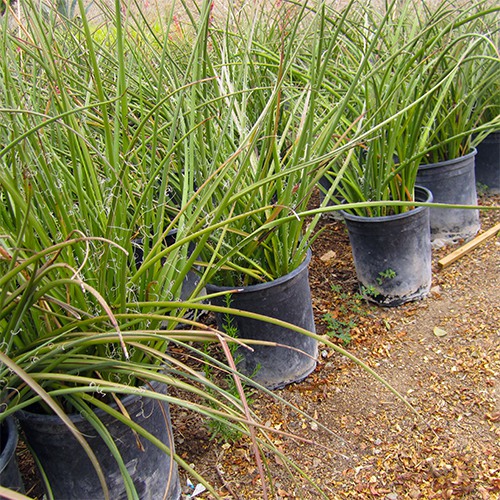
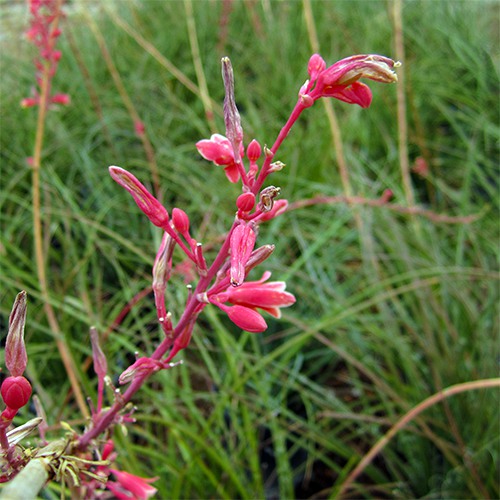
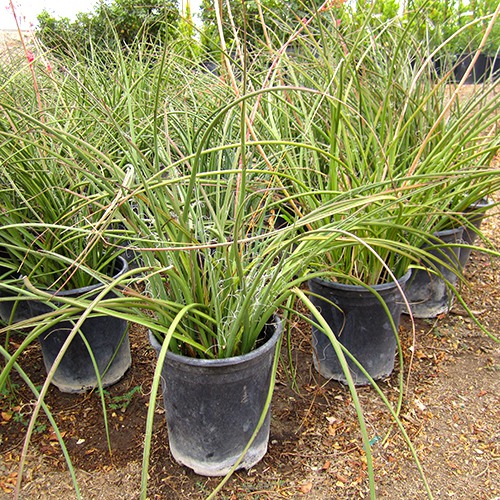
Red Yucca
Hesperaloe parviflora
Hesperaloe parviflora, commonly known as Red Yucca, is one of those plants that thrives on neglect and still looks great doing it. Native to the Southwest, it’s well adapted to heat, drought, and tough conditions, making it a go to for low water landscapes.
The plant forms a clump of long, narrow, arching leaves that have a slightly coarse texture but still feel soft overall. The foliage stays low and contained, creating a clean base that works well in a variety of planting styles.
What really sets it apart are the flower spikes. In spring and often into summer, tall stems rise up well above the foliage and carry coral to red tubular flowers. These blooms seem to float above the plant and are a magnet for hummingbirds.
It’s a great choice for adding vertical movement without adding bulk. The contrast between the low foliage and tall flower spikes gives it a light, airy presence in the landscape.
Hesperaloe parviflora grows best in full sun and requires well drained soil. Once established, it is extremely drought tolerant and performs best with minimal irrigation.
It typically grows about 2 to 3 feet tall at the base, with flower spikes reaching 4 to 6 feet or more. It is well suited for USDA zones 8 through 11 and is hardy down to around 10 to 15 degrees Fahrenheit. The foliage is evergreen.
This plant has low toxicity and is generally a safe choice for gardens with pets and children.
The flowers attract pollinators such as bees and are especially attractive to hummingbirds.
It is generally deer and rabbit resistant, making it a dependable option for low maintenance plantings.
Hesperaloe parviflora fits especially well into desert, Mediterranean, and xeriscape garden designs, where its form and durability can be used to add structure and movement.
Expert Tip:
I like using this when I need vertical interest without adding something heavy or dense. It pairs really well with lower, mounding plants like Asteriscus, Myoporum, or White Lantana, so those flower spikes can stand out and create contrast. It’s also a great way to bring light airy verticality to the design.
— Nick from Rooted Theory
Proper planting technique will help your plants thrive! Follow these simple steps to help your plants establish quickly, develop a strong root system, and live longer:
- Properly dig the hole
- Amend the soil to suit each particular plant
- Place the plant and backfill the soil
- Provide ample water for each particular plant
- Review our how to plant guide!
For detailed information, please download our planting guides: