
Bird of Paradise
Strelitzia reginae
Bird of Paradise
Strelitzia reginae
Strelitzia reginae, commonly known as Bird of Paradise, is a bold, tropical looking plant that brings strong structure and iconic flowers into the landscape. It’s one of those plants that instantly gives a space a more vibrant, resort like feel.
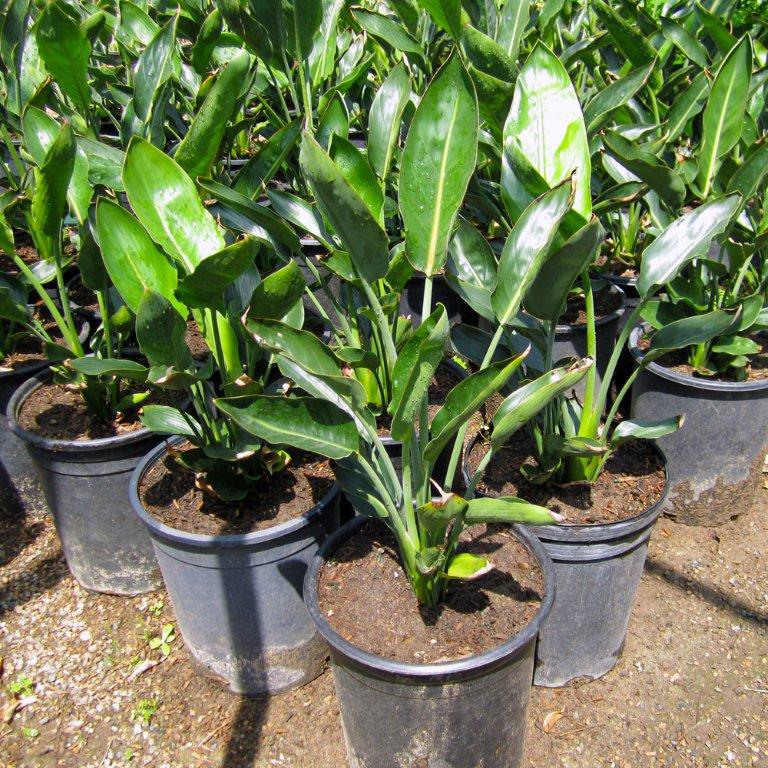
The foliage is made up of upright, paddle shaped leaves that emerge from the base, forming a dense, clumping mass. The leaves are a rich green and have a clean, architectural look that works well even when the plant isn’t in bloom.
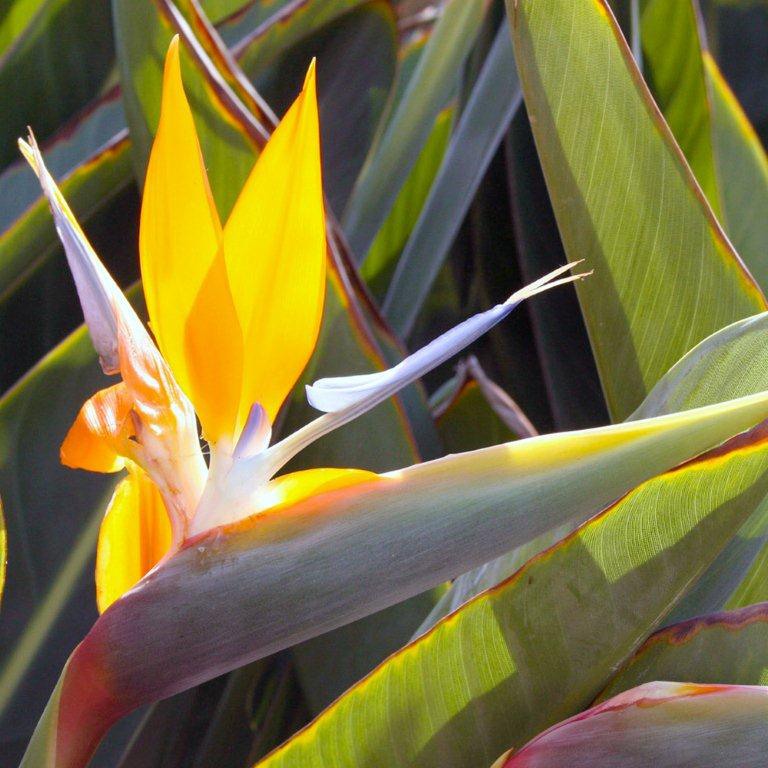
The flowers are what make it truly stand out. Bright orange and blue blooms emerge on upright stems, resembling a bird in flight. These flowers appear throughout much of the year in warm climates and hold up well, both in the garden and as cut flowers.
It works well as a focal plant, in mass plantings, or along borders where you want bold texture and color. It can also be used near patios or entryways where the flowers can be appreciated up close.
Strelitzia reginae grows best in full sun to partial shade and prefers well drained soil. It benefits from regular watering, especially during active growth, and will produce more blooms with consistent care.
It typically reaches about 3 to 5 feet tall and wide, forming a dense clump. It is well suited for USDA zones 9 through 11. The foliage is evergreen.
This plant has low toxicity and is generally a safe choice for gardens with pets and children.
The flowers attract pollinators such as birds and may attract bees.
It is generally deer resistant, though occasional browsing may occur.
Strelitzia reginae fits especially well into Mediterranean, tropical, and modern garden designs, where its form and flowers can be used as a focal point or repeated for impact.
It pairs well with plants like Phormium ‘Guardsman’ to create strong contrast in both color and form, Asparagus 'Myers' and Polygala for middleground placements, and Myoporum parvifolium ‘Putah Creek’ to soften the base with a low, spreading layer.
Expert Tip:
I like using this in groupings rather than as a single plant. When you cluster a few together, it creates a much fuller, more lush look, and you’ll get a stronger flower display over time. It also helps the planting feel more intentional and established.
— Nick from Rooted Theory
Proper planting technique will help your plants thrive! Follow these simple steps to help your plants establish quickly, develop a strong root system, and live longer:
- Properly dig the hole
- Amend the soil to suit each particular plant
- Place the plant and backfill the soil
- Provide ample water for each particular plant
- Review our how to plant guide!
For detailed information, please download our planting guides: