
Fiber Optics Grass
Isolepis cernua
Fiber Optics Grass
Isolepis cernua
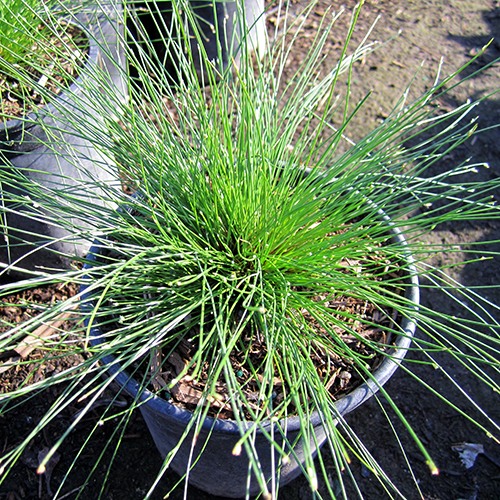
Isolepis cernua, commonly known as Fiber Optic Grass, is a fine-textured, grass-like perennial that brings a soft, flowing, and slightly whimsical quality into the landscape. It’s especially effective for adding movement and contrast in moist or shaded settings.
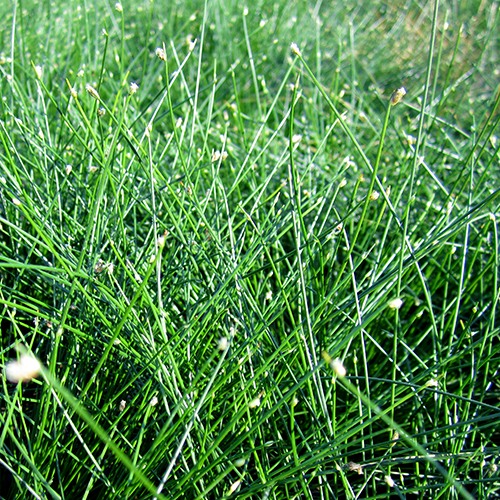
The foliage consists of very thin, bright green stems that arch outward in a fountain-like form. At the tips, small bead-like flowers create the appearance of tiny glowing points, resembling fiber optic strands.
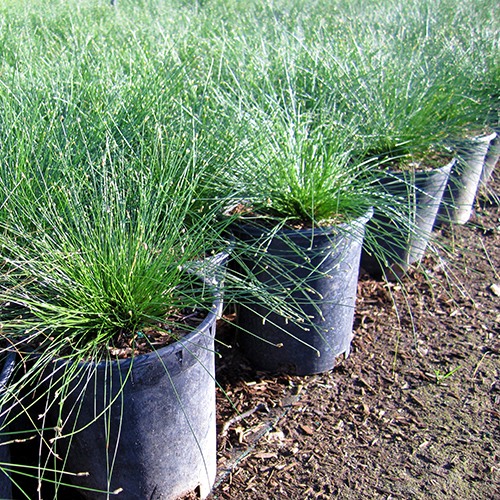
This unique texture makes it a great accent plant, particularly in containers, along water features, or in areas where a lighter, more delicate look is desired.
It forms a dense, low mound that gently spills outward, softening edges and blending transitions between plants and hardscape.
Isolepis cernua grows best in full sun to partial shade with consistent moisture and prefers well drained to moist soil. It performs especially well in regularly irrigated areas or near water features.
It typically reaches about 8 to 12 inches tall and 12 to 18 inches wide, forming a soft, arching clump. It is well suited for USDA zones 8 through 11. The foliage is evergreen in mild climates.
This plant has low toxicity and is generally safe for gardens with pets and children.
It does not produce showy flowers beyond its unique tip structures and is primarily grown for its form and texture.
It is generally deer resistant.
Isolepis cernua fits especially well into woodland, coastal, container, and water-wise (with irrigation) garden designs, where its fine texture can be used to create contrast and movement.
It pairs well with plants like Acorus gramineus ‘Ogon’ to introduce bright color contrast, Carex oshimensis ‘Evergold’ to reinforce a flowing, variegated palette, and Lobelia erinus to add a low, flowering layer with seasonal color.
Expert Tip:
Place this in areas with consistent moisture, because it performs best when the soil does not dry out completely. Occasional trimming will help keep the plant dense and prevent it from becoming too open.
— Nick from Rooted Theory
Proper planting technique will help your plants thrive! Follow these simple steps to help your plants establish quickly, develop a strong root system, and live longer:
- Properly dig the hole
- Amend the soil to suit each particular plant
- Place the plant and backfill the soil
- Provide ample water for each particular plant
- Review our how to plant guide!
For detailed information, please download our planting guides: