
Black Spurge
Euphorbia 'Black Bird'
Black Spurge
Euphorbia 'Black Bird'
Shipping
1 Gallon
to
is
per unit when ordering a full box of
4.0
units.
Edit my zipcode
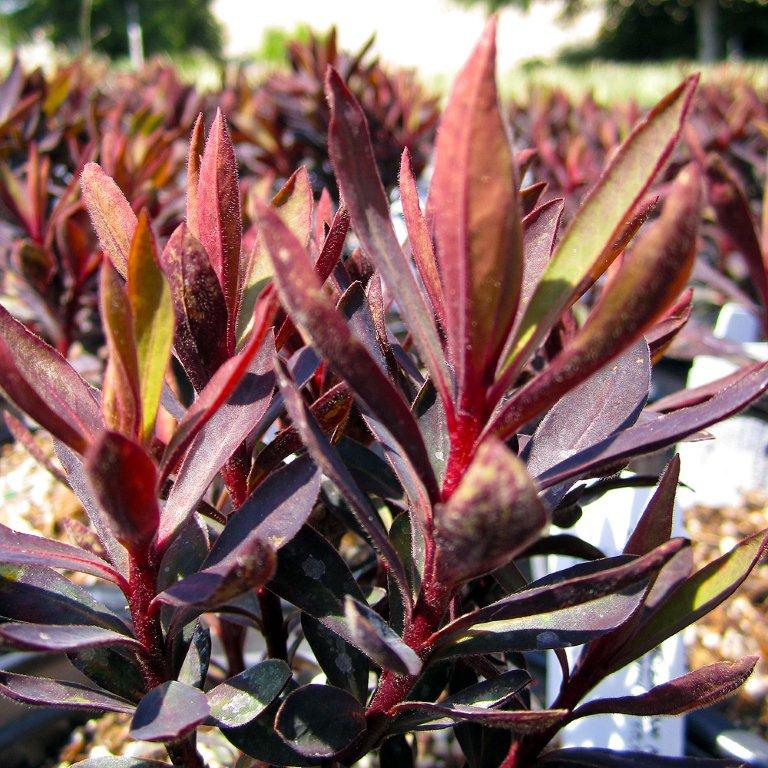
- Euphorbia ‘Black Bird’ is a bold, compact perennial that brings deep contrast and a clean, modern look into the landscape. It’s especially useful when you want something dark and structured without going too large.
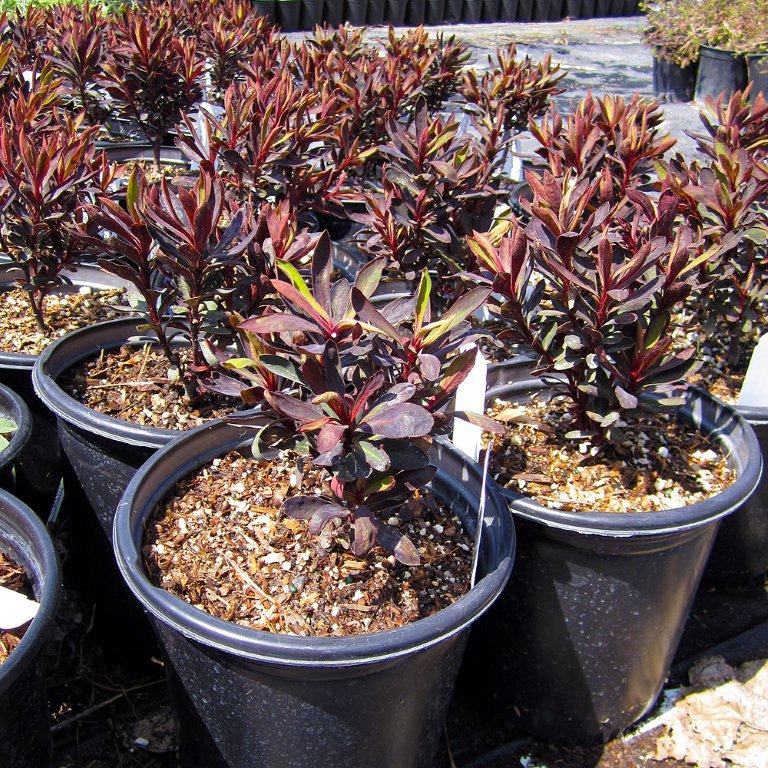
- The foliage is a rich burgundy to near black, forming a dense, rounded mound. That dark tone holds well through the season and creates a strong backdrop for lighter or brighter plants.
- In spring, it produces clusters of chartreuse to yellow green bracts that sit above the foliage. The contrast between the dark leaves and bright blooms is what really makes this plant stand out.
- It stays relatively low and compact, making it a great option for borders, mass plantings, or as a repeating element in a design. It brings color and structure without taking over the space.
- Euphorbia ‘Black Bird’ grows best in full sun to partial shade and prefers well drained soil. It is drought tolerant once established and performs well in low water landscapes.
- It typically reaches about 1 to 2 feet tall and wide, forming a tight, mounded shape. It is well suited for USDA zones 6 through 9. The foliage is evergreen to semi evergreen depending on climate.
- One thing to be aware of is that, like other euphorbias, it produces a milky sap that can be irritating to skin and eyes, so it’s best to handle with care.
- This plant has moderate toxicity and should not be ingested.
- The flowers may attract pollinators such as bees.
- It is generally deer and rabbit resistant.
- Euphorbia ‘Black Bird’ fits especially well into Mediterranean, modern, and drought tolerant garden designs, where its color can be used to create contrast and definition.
- It pairs well with plants like Ceanothus 'Yankee Point', Lavandula species to soften the look with texture and color, Lomandra 'Platinum Beauty', and Woolly Thyme as a low foreground.
- Expert Tip:
- I like using this as a contrast plant in smaller groupings of 3's or 5's. That dark foliage really pops when you place it next to lighter plants, and repeating it a few times helps create a more cohesive, intentional design.
- — Nick from Rooted Theory
Foliage:
Evergreen,
Semi-deciduous
Water Needs:
Low,
Low to Moderate
Bloom Season:
Spring
Mature Width:
1-2'
Form:
Mound
Mature Height:
1-2'
Proper planting technique will help your plants thrive! Follow these simple steps to help your plants establish quickly, develop a strong root system, and live longer:
- Properly dig the hole
- Amend the soil to suit each particular plant
- Place the plant and backfill the soil
- Provide ample water for each particular plant
- Review our how to plant guide!
For detailed information, please download our planting guides: