
Blue Lavandin
Lavandula x intermedia 'Provence'
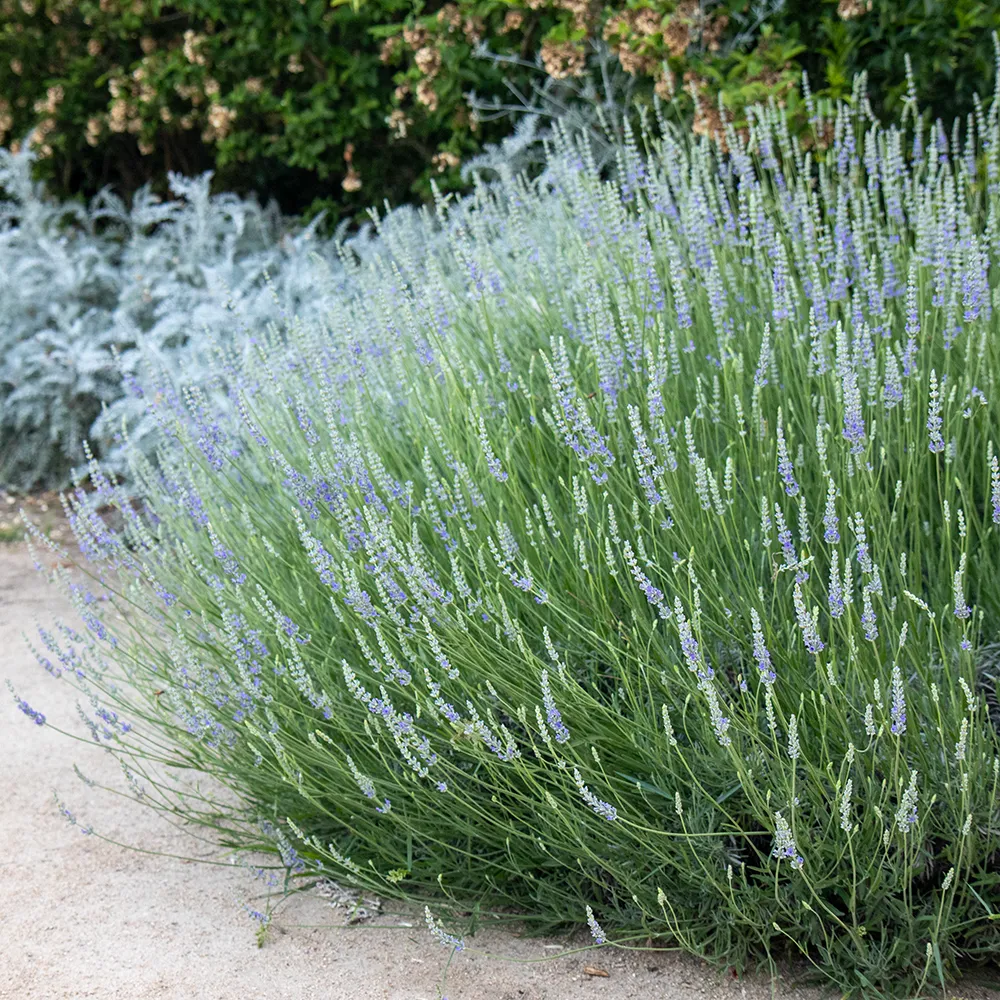
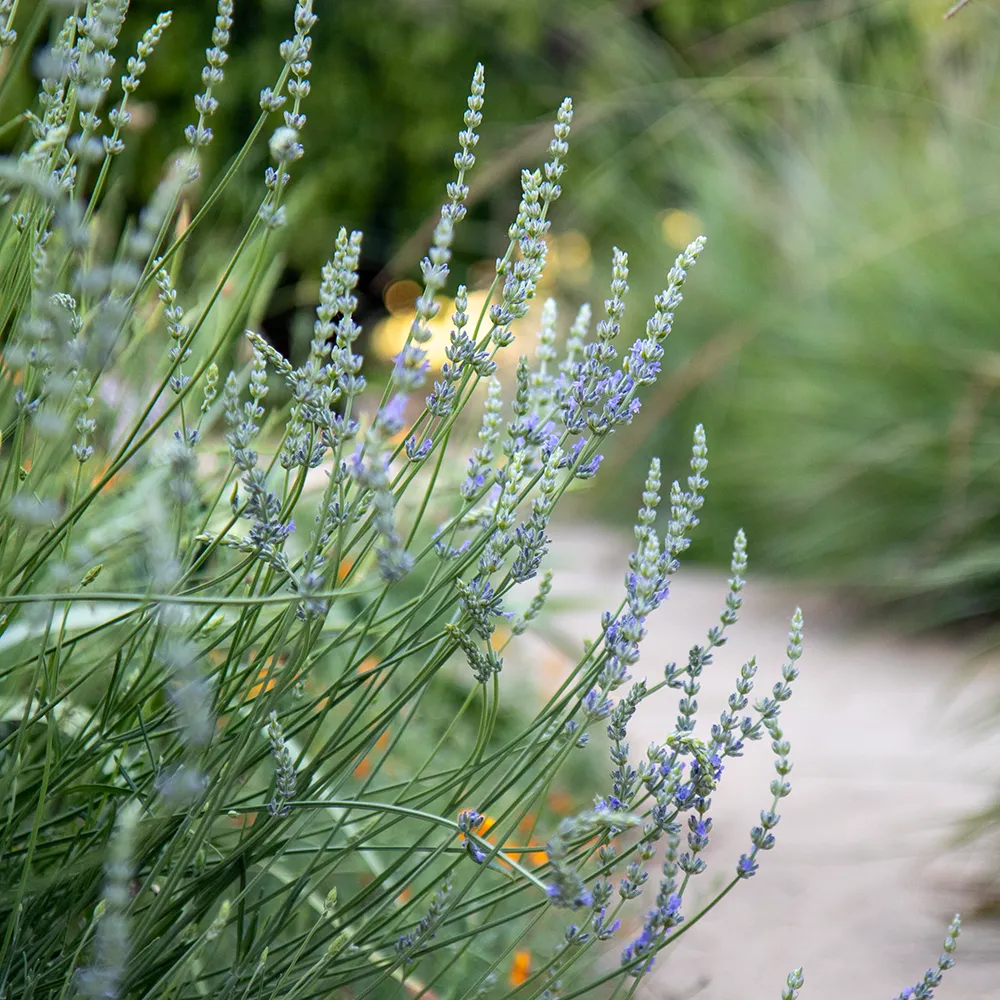
Blue Lavandin
Lavandula x intermedia 'Provence'
Lavandula x intermedia ‘Provence’, commonly known as Provence Lavender, is a classic, large growing lavender prized for its fragrance, soft color, and strong presence in the landscape. It’s one of the best choices when you want that iconic lavender look with a bit more size and impact.
The foliage is narrow and gray green, forming a dense, mounded base with a soft, silvery tone. It has a clean, consistent texture that works well in both formal and relaxed plantings.
In late spring through summer, long flower spikes rise above the foliage, topped with soft lavender purple blooms. The flowers are especially fragrant and are commonly used for cutting, drying, and creating that classic lavender scent in the garden.
Compared to smaller lavenders, ‘Provence’ has a looser, more flowing habit, which gives it a slightly more relaxed feel while still maintaining structure.
It works well in mass plantings, along pathways, or as a low hedge where the fragrance can be appreciated up close.
Lavandula ‘Provence’ grows best in full sun and requires well drained soil. It thrives in dry conditions and performs best with minimal water once established.
It typically reaches about 2 to 3 feet tall and 3 to 4 feet wide, forming a broad, rounded mound. It is well suited for USDA zones 5 through 9. We also see it thriving in zone 10 here in Southern California. The foliage is evergreen to semi evergreen depending on climate.
This plant has low toxicity and is generally safe for gardens with pets and children.
The flowers attract pollinators such as bees and butterflies.
It is generally deer and rabbit resistant.
Lavandula x intermedia ‘Provence’ fits especially well into Mediterranean, cottage, and formal garden designs, where its fragrance, color, and form can be used to create rhythm and cohesion.
It pairs well with plants like Santolina chamaecyparissus to reinforce a soft, silvery palette, Rosa ‘Iceberg’ to add a classic flowering contrast, and Stachys byzantina (Lamb’s Ear) to create a layered, textural ground plane.
Expert Tip:
Place this in full sun with excellent drainage, because too much moisture can shorten its lifespan. Pruning lightly after flowering will help maintain a compact shape and encourage a fuller plant over time.
— Nick from Rooted Theory
Proper planting technique will help your plants thrive! Follow these simple steps to help your plants establish quickly, develop a strong root system, and live longer:
- Properly dig the hole
- Amend the soil to suit each particular plant
- Place the plant and backfill the soil
- Provide ample water for each particular plant
- Review our how to plant guide!
For detailed information, please download our planting guides: