
Little Ollie Olive
Olea europaea 'Little Ollie'
Little Ollie Olive
Olea europaea 'Little Ollie'
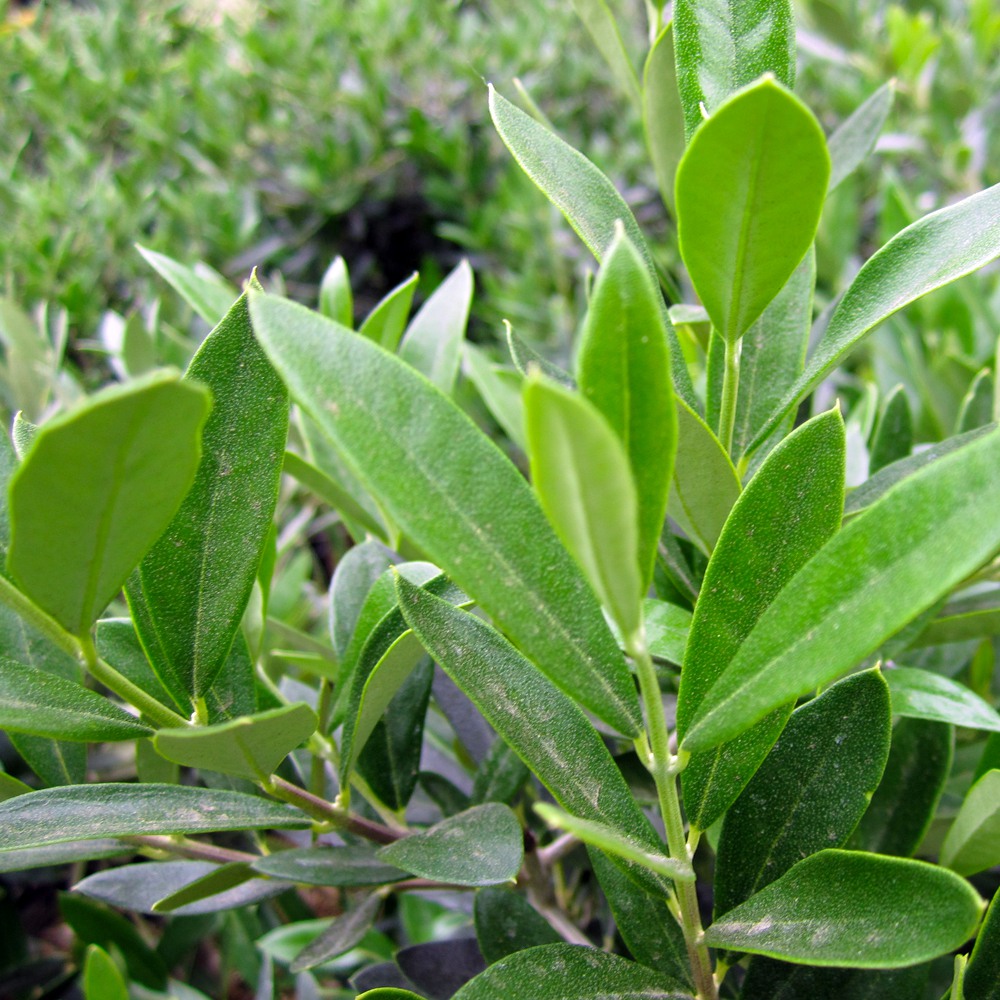
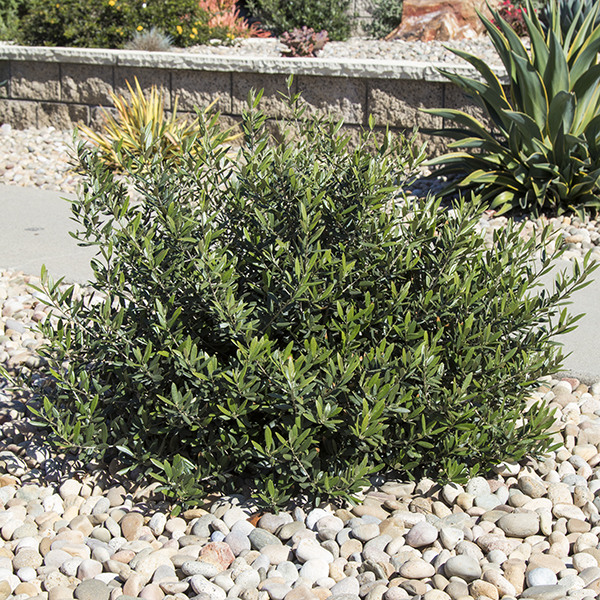
- Olea europaea ‘Little Ollie’, commonly known as Dwarf Olive, is a compact, non-fruiting olive that brings the classic Mediterranean look into smaller spaces. It has the same soft, silvery foliage as traditional olives, but in a much more controlled, manageable form.
- The leaves are narrow and gray green with a lighter underside, giving the plant a muted, almost dusty tone that works well in drought tolerant palettes. The foliage has a soft texture that contrasts nicely with bolder or darker plants.
- It naturally grows into a dense, rounded shrub, making it ideal for low hedging, foundation planting, or as a structural filler. It can also be lightly shaped into a more formal look if desired.
- Because it is largely non-fruiting, it avoids the mess associated with standard olive trees, making it a popular choice for patios and residential landscapes.
- Olea ‘Little Ollie’ grows best in full sun and requires well drained soil. Once established, it is highly drought tolerant and thrives in warm, dry conditions.
- It typically reaches about 4 to 6 feet tall and wide, forming a compact, full shrub. It is well suited for USDA zones 8 through 11. The foliage is evergreen.
- This plant has low toxicity and is generally safe for gardens with pets and children.
- The flowers are small and not especially noticeable.
- It is generally deer resistant.
- Olea europaea ‘Little Ollie’ fits especially well into Mediterranean, modern, and formal garden designs, where its color and form can be used to create structure and cohesion.
- It pairs well with plants like Phlomis fruticosa to reinforce a soft, silvery palette, Salvia chamaedryoides to add complementary blue tones and texture, and Dymondia margaretae to create a clean, drought tolerant ground layer beneath.
- Expert Tip:
- Place this in full sun and allow enough spacing between plants, because good light and airflow help maintain a dense, healthy form. Occasional light pruning will keep it compact and prevent it from becoming too woody over time. I also love this as a globe form in more formal designs.
- — Nick from Rooted Theory
Foliage:
Evergreen
Sun Exposure:
Full Sun (6+ Hours Of Direct Sunlight)
Water Needs:
Low,
Low to Moderate
Form:
Mound
Mature Width:
5-6'
Mature Height:
5-6'
Bloom Season:
Infrequent
Proper planting technique will help your plants thrive! Follow these simple steps to help your plants establish quickly, develop a strong root system, and live longer:
- Properly dig the hole
- Amend the soil to suit each particular plant
- Place the plant and backfill the soil
- Provide ample water for each particular plant
- Review our how to plant guide!
For detailed information, please download our planting guides: