
Oregon Grape Holly
Mahonia aquifolium
Oregon Grape Holly
Mahonia aquifolium
- Mahonia aquifolium, commonly known as Oregon Grape, is a hardy, evergreen shrub native to western North America that brings year round structure along with some great seasonal highlights. It has a slightly rugged, woodland character that fits especially well into naturalistic and native plantings.
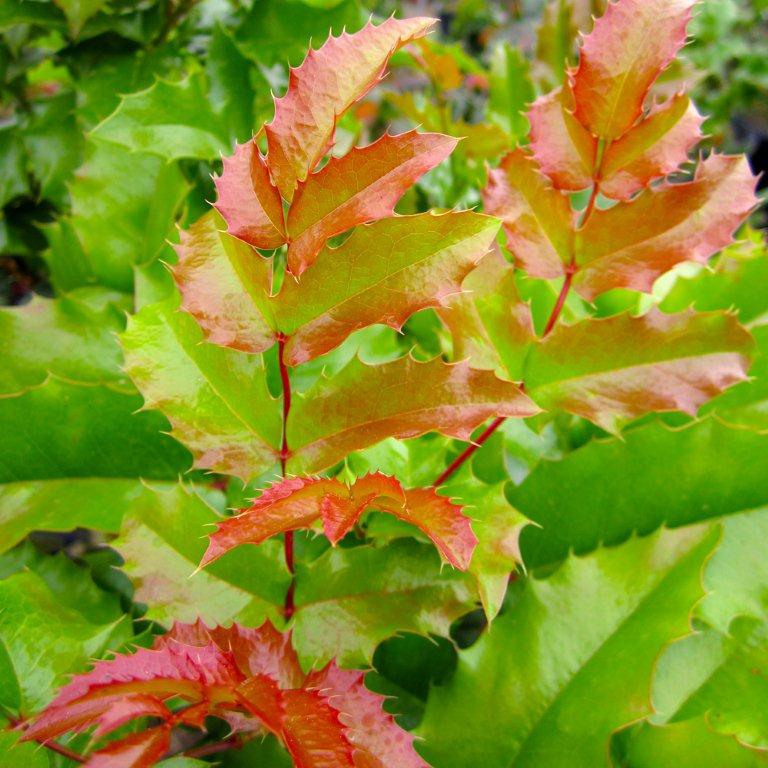
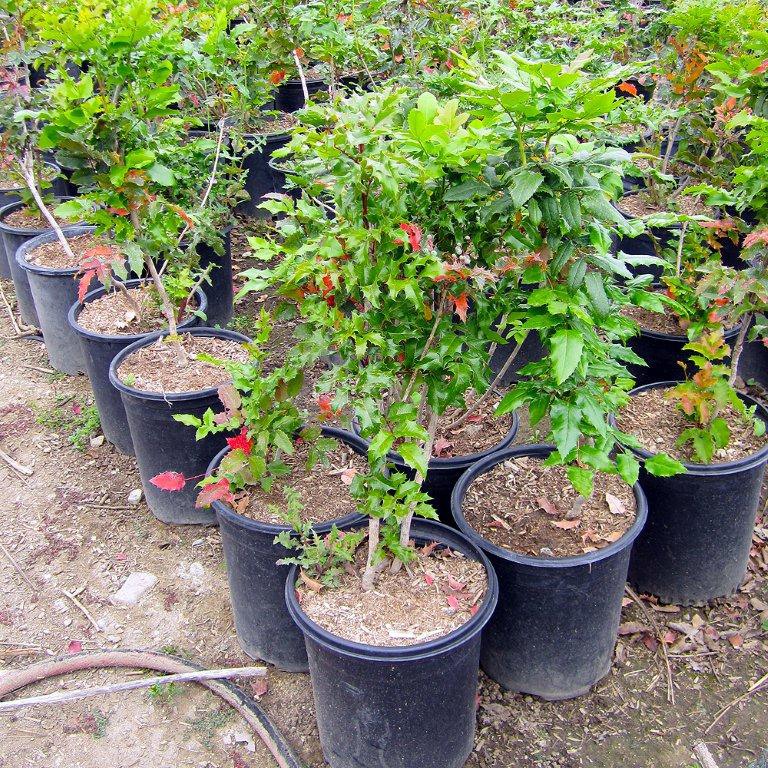
- The foliage is made up of glossy, holly like leaves with spiny edges, giving it a bold texture. New growth often emerges with a reddish tint before maturing to deep green, and in cooler weather, the leaves can take on bronze or purple tones.
- Late winter to early spring is when it really shines. Clusters of bright yellow flowers appear at the tips of the stems, adding a surprising burst of color during a quieter time in the garden. These are followed by blue to purple berries that resemble small grapes and are attractive to birds.
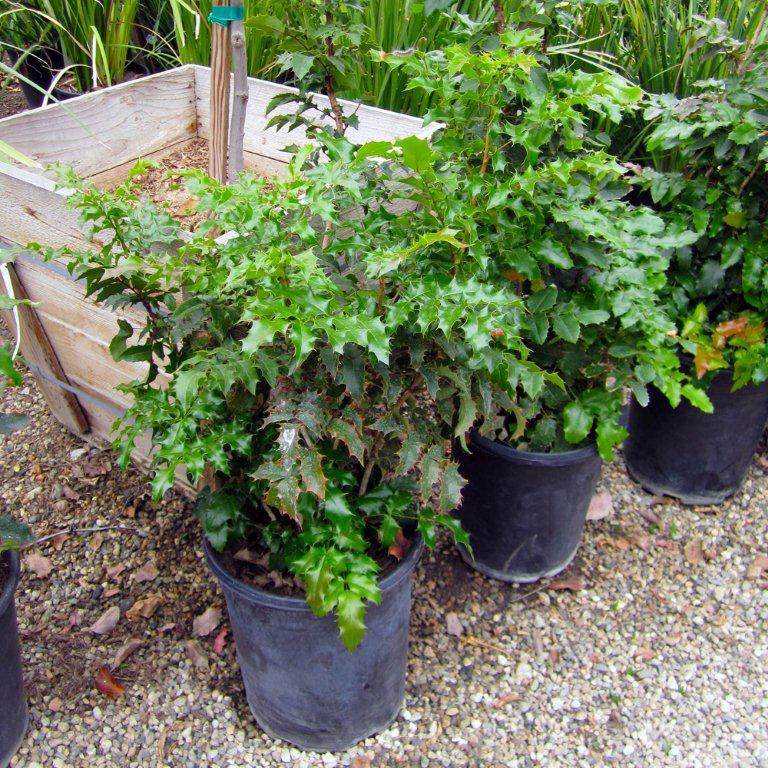
- It tends to grow in a somewhat upright, slowly spreading form, making it useful as a background plant, informal hedge, or part of a layered planting. It also does well in shaded areas where many flowering shrubs struggle.
- Mahonia aquifolium grows best in partial shade to full shade, though it can tolerate some sun in cooler climates. It prefers well drained soil and benefits from occasional watering, especially during dry periods, but is fairly adaptable once established.
- It typically reaches about 3 to 6 feet tall and 3 to 5 feet wide, forming a dense, slightly spreading shrub. It is well suited for USDA zones 5 through 9 and is quite cold hardy. The foliage is evergreen. Although sources show this plant up to zone 9, we see it adapting into parts of zone 10 in Southern California when given the right conditions.
- This plant has some toxicity and may cause irritation or illness if ingested, so it is best to plant with care around pets and children.
- The flowers attract pollinators such as bees, and the berries are valuable for birds and wildlife.
- It is generally deer resistant, though some browsing may occur. Rabbits tend to leave it alone once established.
- Mahonia aquifolium fits especially well into woodland, native, and cottage garden designs, where its texture and seasonal interest can be appreciated.
- With its bold foliage, winter blooms, and adaptability to shade, this is a great plant for adding structure and interest to more sheltered garden spaces.
- Expert Tip:
- I like to selectively thin this one out rather than shearing it. Removing a few of the older stems at the base keeps the plant from getting too dense and lets you show off that layered structure. It also encourages tighter new growth, which tends to look better and keeps the plant feeling more natural over time.
- — Nick from Rooted Theory
Foliage:
Evergreen
Form:
Upright And Rounded
Sun Exposure:
Part Shade,
Full Shade
Mature Width:
4-5'
Mature Height:
4-5'
Proper planting technique will help your plants thrive! Follow these simple steps to help your plants establish quickly, develop a strong root system, and live longer:
- Properly dig the hole
- Amend the soil to suit each particular plant
- Place the plant and backfill the soil
- Provide ample water for each particular plant
- Review our how to plant guide!
For detailed information, please download our planting guides: