
Tree Aeonium
Aeonium arboreum
Tree Aeonium
Aeonium arboreum
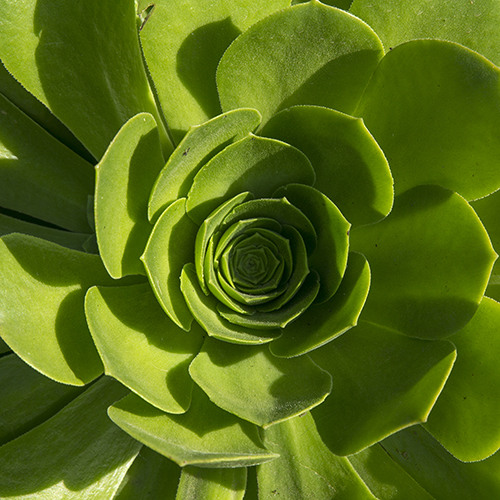
Native to the Canary Islands, Aeonium arboreum is a distinctive succulent known for its branching habit and rosettes of glossy, spoon shaped leaves. Unlike many low growing succulents, it forms a small, shrubby structure, with rosettes held at the tips of upright stems.
The foliage is typically a rich green, though it can deepen or take on darker tones depending on sun exposure and variety. The rosettes have a clean, symmetrical look that adds structure without feeling too rigid, making it easy to work into a variety of planting styles.
In late winter to spring, mature plants may produce tall flower spikes topped with clusters of small yellow blooms. After flowering, the individual rosette will fade, but the plant continues to grow through its branching stems.
This plant works well as an accent, in containers, or planted in groups for a layered, sculptural effect. It pairs nicely with other succulents and drought tolerant plants, especially those with contrasting textures or colors.
Aeonium arboreum grows best in full sun to partial shade, with some protection from intense afternoon sun in hotter inland areas. It prefers well drained soil and benefits from occasional watering, especially during its active growing season. Unlike many succulents, it may go semi dormant in extreme summer heat.
It typically grows about 3 to 6 feet tall and 2 to 4 feet wide, depending on conditions. It is well suited for USDA zones 9 through 11 and is sensitive to frost, tolerating temperatures down to around 25 to 30 degrees Fahrenheit. The foliage is evergreen in mild climates.
This plant has some toxicity and may cause irritation or illness if ingested, so it is best to plant with care around pets and children.
When in bloom, the flowers can attract pollinators such as bees.
It is generally deer and rabbit resistant, making it a dependable option for low maintenance plantings.
Aeonium arboreum fits especially well into Mediterranean, coastal, and succulent garden designs, where its branching form and rosettes can add height and visual interest.
With its sculptural shape, seasonal blooms, and easy care nature, this is a great plant for adding structure and a slightly tropical feel to the landscape.
Proper planting technique will help your plants thrive! Follow these simple steps to help your plants establish quickly, develop a strong root system, and live longer:
- Properly dig the hole
- Amend the soil to suit each particular plant
- Place the plant and backfill the soil
- Provide ample water for each particular plant
- Review our how to plant guide!
For detailed information, please download our planting guides: